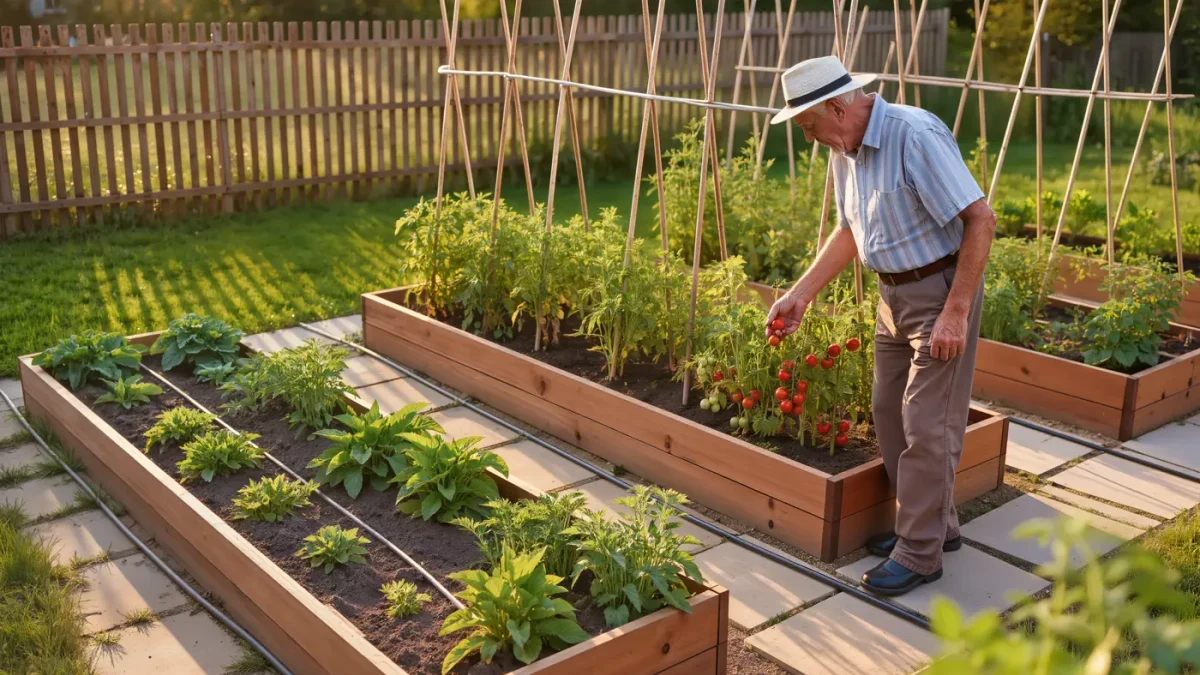
Accessible gardening comes down to two numbers and one rule: a raised bed between 24 and 30 inches tall lets you garden from a seated position, the ADA's unobstructed side reach range tops out at 48 inches — which caps bed width at about 24 inches from a seated edge and 30 inches from each standing side — and everything you need belongs between hip and shoulder height so no task forces bending, kneeling, or an overhead stretch. None of this requires a special garden; it requires the right dimensions.
Spedtacular Daily Living publishes information, not medical advice. If gardening follows an injury, surgery, or a condition that affects stamina or joints, a physical or occupational therapist can tune these dimensions to your body — the measurements below come from accessibility standards and the tool practices described.
How tall should a raised bed be?
Match the bed height to how you work, not to lumber dimensions that happen to be on sale.
| Bed height | Works for | Notes |
|---|---|---|
| 12 inches | Standing gardeners who want less bending | Still requires reaching to soil level; cheapest to build |
| 24–30 inches | Seated gardening from a wheelchair or bench | Check your actual seated knee clearance; wheelchair armrests often sit 28–30 inches high |
| 30–36 inches | Standing work with minimal bend; gardeners who cannot easily flex at the hip | Taller beds dry out faster; shallow-root crops suit them best |
| Table-height beds with open legs beneath | Wheelchair users gardening facing the bed | Needs open knee space under the tray; per ADA accessible work surface guidance, 34 inches high is the standard maximum |
The ADA does not regulate home gardens — its standards apply to public accommodations and government facilities — but the underlying ergonomics travel well. A 34-inch work surface with open knee space below, the dimension the ADA standards and ANSI A117.1 use for accessible work surfaces, is a sound starting height for a table-style bed you roll up to. Requirements do not bind you here; physics and your own measurements do.
How wide and how deep?
Width is a reach question. The ADA's reach-range guidance caps an unobstructed forward reach at 48 inches and a side reach at 54 inches, but comfortable gardening reach — repeated motions, not one-time touches — is shorter. Practical rules from adaptive-gardening programs: keep beds 24 inches wide or less if you work seated on one side, up to about 30 inches if you stand, and up to 4 feet only when you can work from both sides. Depth of 6 to 12 inches suits most vegetables and herbs; deeper beds waste soil unless you grow root crops like carrots or potatoes.
Leave paths 36 inches minimum between beds — the accessible-route width used in the ADA standards — so a wheelchair, walker, or rolling seat turns without backing up repeatedly. A firm, level path surface matters as much as width; loose gravel defeats an otherwise good layout.
What makes a garden tool adaptive?
Adaptive tools are ordinary tools with changed geometry or grip. Look for these features, which extension-services and tool manufacturers describe consistently:
- Extended handles on trowels, hoes, and cultivators, so you work upright instead of bent — the same hip-to-shoulder rule applied outdoors.
- Ergonomic or thickened grips that spread load across the palm for weak grip or arthritis; add-on foam tubing does the same to tools you already own.
- Cuff-and-strap tools that anchor to the forearm when hand grip is unreliable.
- Trigger- and squeeze-release pruners with ratchet mechanisms that cut in stages rather than one hard squeeze.
- Lightweight materials — aluminum or fiberglass handles instead of steel and hardwood — which cut weight without much strength loss.
- Reaching aids and grabbers for harvesting and litter pickup from a seated position.
Manufacturers publish weights and handle lengths on spec sheets; use them, because "lightweight" on a label is not a measurement. When a product is central to your setup, buy from a seller with a real return policy and keep the receipt until you have used it in the bed it was bought for.
How do you set up the garden layout itself?
Workflow beats willpower. Build the garden around the order in which you actually move through it:
- Water first, near the beds. A drip-irrigation kit on a timer eliminates the heaviest repeated task — carrying cans or hauling hose. Put spigots and hose storage within seated reach of each bed.
- Store tools where they are used. A wall rack or rolling cart at hip-to-shoulder height beside the bed, not a shed forty feet away.
- Put compost and soil bins on the same height logic as the beds — a raised bin with a lid you open one-handed beats a ground pile every time.
- Stage a resting point — a bench or a level pad where a wheelchair parks square to the bed edge, with knee clearance under any table-height tray.
- Choose plants that shrink the work: bush varieties instead of climbers that need tall staking, perennial herbs that return without replanting, and mulched beds that cut watering and weeding both.
Can you garden from a wheelchair without permanent beds?
Yes, and the entry cost is low. Container gardening with tall pots, grow bags set on benches or pallets, and vertical wall planters all bring plants into the seated reach range without construction. A table-height setup can start as pots on a sturdy existing table — check that a wheelchair rolls under it, which means open space under the tabletop rather than a skirt or apron around the legs. When you graduate to built beds, you already know the heights and widths that worked.
What does maintenance look like across a season?
Accessible gardening succeeds when the hard jobs are engineered out before the season starts. Irrigation on a timer covers vacations and bad weeks. Raised beds warm earlier in spring and drain faster after rain, which shortens the planting window you spend at soil level. A rolling seat or rolling work cart turns long harvest rows into seated work. And the weekly ten-minute walk-through — deadheading, checking moisture, harvesting — stays inside the reach ranges the layout was built around, so the garden you designed in May is still the garden you can work in August.
Start with one bed, measured to your body, and one tool with the right handle. The second bed gets easier to size, because by then you know your own reach — the only dimension in this whole guide that no standard supplies.
What about sun, heat, and stamina through the season?
Plan the garden for the body you have at 2 p.m. in July, not the one you had in April. Put the seating or wheelchair pad on the shaded side of the beds where your climate allows, keep a water source for you as well as the plants, and schedule the heavy jobs — planting, soil topping, harvest bulk — for the coolest hours. Many adaptive gardeners keep a short rolling cart with water, gloves, sun protection, and phone that travels the path with them, so resting never means leaving the work. Pacing the season matters more than any single tool purchase.