Build-to-rent communities are entire neighborhoods of single-family houses that a company builds and holds as rentals instead of selling them off one by one. You get a detached home, a yard, and often a garage, but you sign a lease rather than a mortgage. The boom matters to renters because it adds a new housing product to the suburbs — one with its own pricing, lease terms, and fine print.
The growth has been driven by two forces at once. Many would-be buyers have been priced out by high rates and home prices, so demand for rental houses has stayed strong. At the same time, institutional investors found single-family rentals attractive as a long-term income asset. The result: purpose-built rental subdivisions rising on the edges of fast-growing metros, alongside the conversion of existing for-sale homes into scattered rentals.
For renters with accessibility needs, the picture is mixed. New construction often means better baseline design than a 1970s rental house. But build-to-rent is not the same as accessible housing, and it pays to know the difference before you tour. Our overview of The Accessible Housing Supply Shortage, Explained covers why purpose-built accessible stock remains scarce across every housing type.
What exactly is a build-to-rent community?
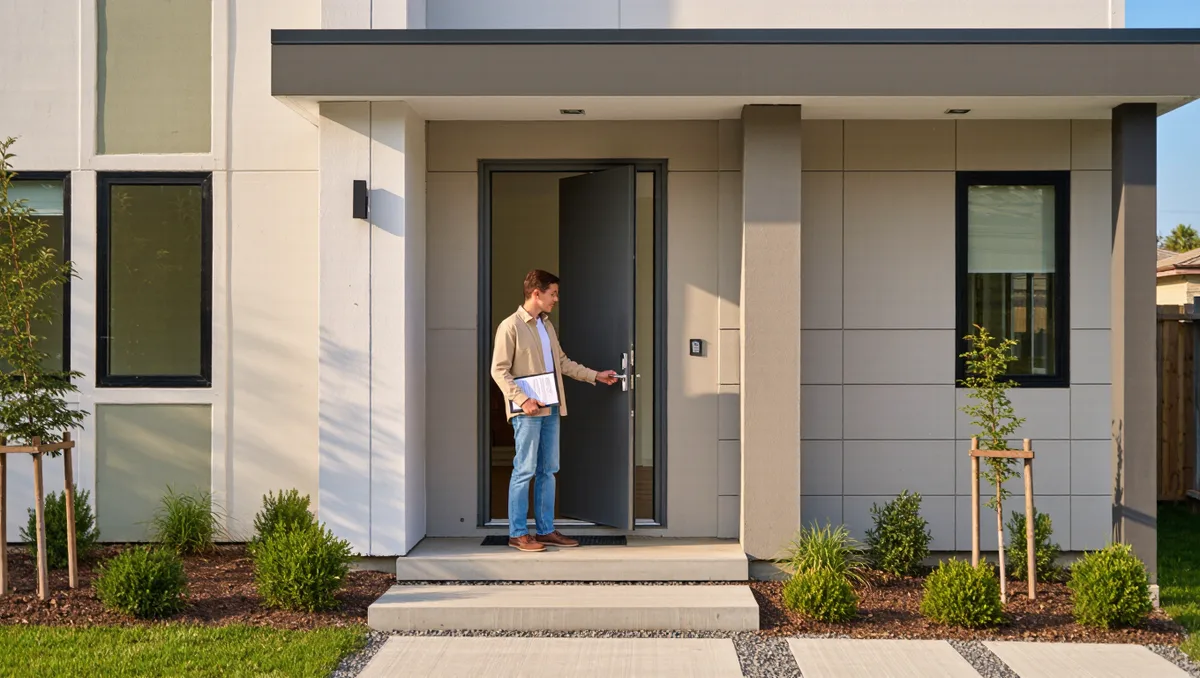
A build-to-rent community is a subdivision designed, built, and owned by a single operator who rents every home in it. The houses are usually detached, with three or more bedrooms, and the neighborhood often includes shared amenities: a pool, a clubhouse, a dog park, maintained common areas. Think of it as an apartment complex scaled up to house-sized lots.
That structure changes who you deal with. In a conventional rental house, your landlord might be a family that owns one property. In a build-to-rent neighborhood, your landlord is a company with a leasing office, standard lease templates, and portfolio-wide policies. That can mean more professional maintenance — and less flexibility when your situation doesn't fit the template.
Why are builders choosing rent over sale?
The economics are straightforward. When mortgage rates rise and buyer demand softens, selling every finished house becomes harder. Holding them as rentals keeps the asset producing income while the for-sale market works through its cycle. Some operators build rental communities deliberately; others pivot when the sales market slows.
For investors, single-family rentals offer steady rent collections and the possibility of appreciation on the land. That dual appeal — income now, value later — is why capital has flowed into the sector through both strong and weak housing markets. The risk that breaks the deal is simple: if local rents fall or vacancy rises faster than the operator's model assumes, the numbers stop working, and cost pressure lands on operations — staffing, maintenance response times, and renewal pricing.
What does this mean for renters day to day?
You get genuine advantages. New construction typically means modern systems, energy-efficient HVAC, and fewer surprise repairs than an aging rental stock. Amenities and landscaping are professionally maintained. And because the operator owns hundreds of homes, there is usually a real maintenance operation, not a part-time handyman.
You also face trade-offs. Rent in these communities tends to sit at the top of the local market, and renewal increases are set centrally, not by an individual owner's judgment. Lease terms can be more standardized and less negotiable. Some operators add fees for amenities, pet policies, or services that a single-family landlord might have included. Read the full lease, not just the rent figure — the effective monthly cost is the rent plus every recurring fee.
Tenant protections also vary widely by state, and company-owned rentals are governed by the same landlord-tenant law as any other rental in your state. Our guide to What Tenant Protections Look Like Across Different States walks through how notice periods, security deposit rules, and repair obligations differ.
What should renters with accessibility needs check?
New construction is a chance to ask better questions before you sign. Builders are increasingly aware of universal design — features that work for people across ages and abilities — and our piece on Universal Design Features Showing Up in New Construction lists what to look for, from zero-step entries to lever handles and wider interior doorways.
Practical checklist for a build-to-rent tour:
- Measure the entry. A zero-step entrance is not standard in every build-to-rent product; ask which floor plans offer one.
- Check interior door widths and bathroom clearances against what you actually need, not what a brochure implies.
- Ask, in writing, whether the operator permits modifications — grab bars, ramps, a roll-in shower — and who removes or pays for them at move-out.
- Confirm how maintenance requests are handled and what the typical response commitment is.
- Get the modification agreement in the lease or as a signed addendum, not a verbal promise from the leasing agent.
One caution worth naming: sales staff may describe a home as "accessible" when it merely meets new-construction basics. Ask for specifics — clear floor space, turning room, threshold heights — and compare them against your own requirements. If you plan modifications, our cost guides on Wet Room vs. Roll-In Shower: A Cost Comparison and What an Accessible ADU Costs to Build give a sense of what common projects run.
How does build-to-rent change the surrounding market?
When a rental subdivision lands in a suburb, it adds rental supply that did not exist before, which can ease pressure on rents in that pocket. It also competes with local landlords for the same tenants, which can push older rental houses to sharpen their pricing or condition. For the neighborhood itself, an institutional owner means a single party controls a block of homes at once — a governance question some cities have started debating.
For renters weighing rent versus buy, build-to-rent adds a middle option: house-style living without ownership costs or ownership risk. Whether that trade makes sense depends on your timeline, your local market, and how long you expect to stay put. Our comparison of Aging in Place vs. Senior Living: A Cost Comparison shows how housing form drives long-term cost in a different context, and the same discipline — total cost of occupancy, not headline rent — applies here.
What this means for your next move
Build-to-rent communities give renters a new way to get suburban space: newer homes, maintained grounds, and professional management, at premium pricing and with standardized leases. The evidence so far suggests the product is durable — it serves a real demand from households who want a house without a mortgage — but the experience depends heavily on the specific operator and the specific state's tenant law.
Before you sign, do three things. Compare the all-in monthly cost, fees included, against comparable rentals nearby. Get any modification permission in writing. And verify the accessibility features you need room by room, rather than trusting a floor plan rendering. A lease is a deal document like any other; read it the way you'd read a purchase contract, because for the term of the lease, that's exactly what it is.