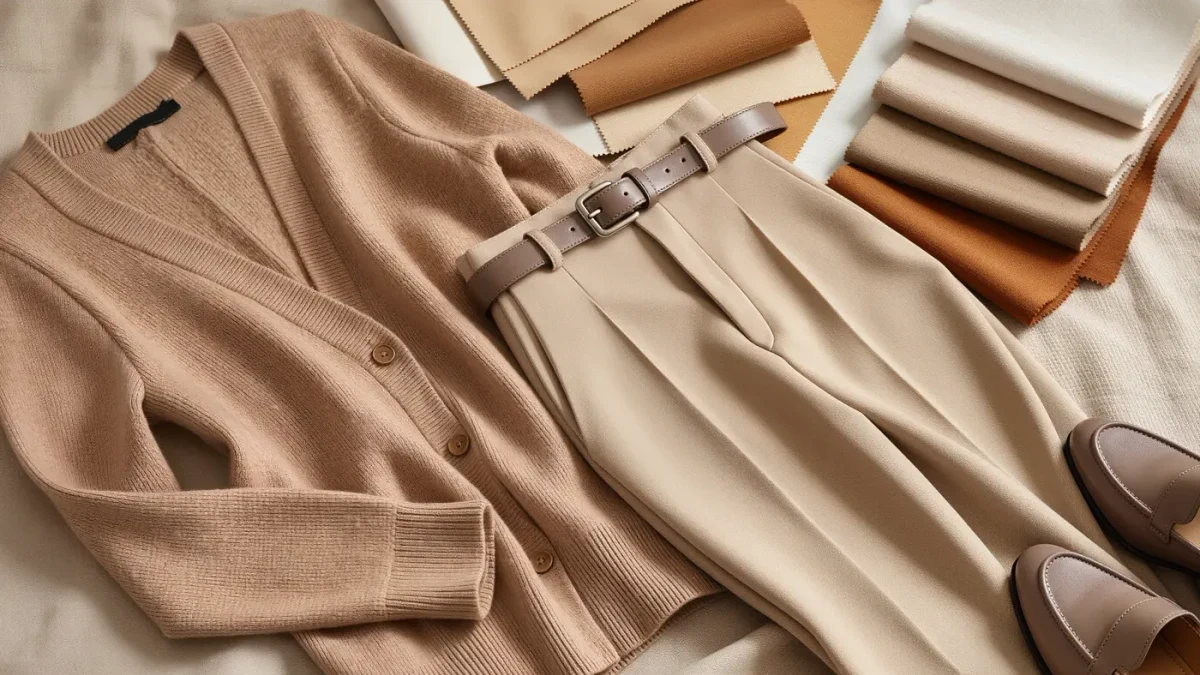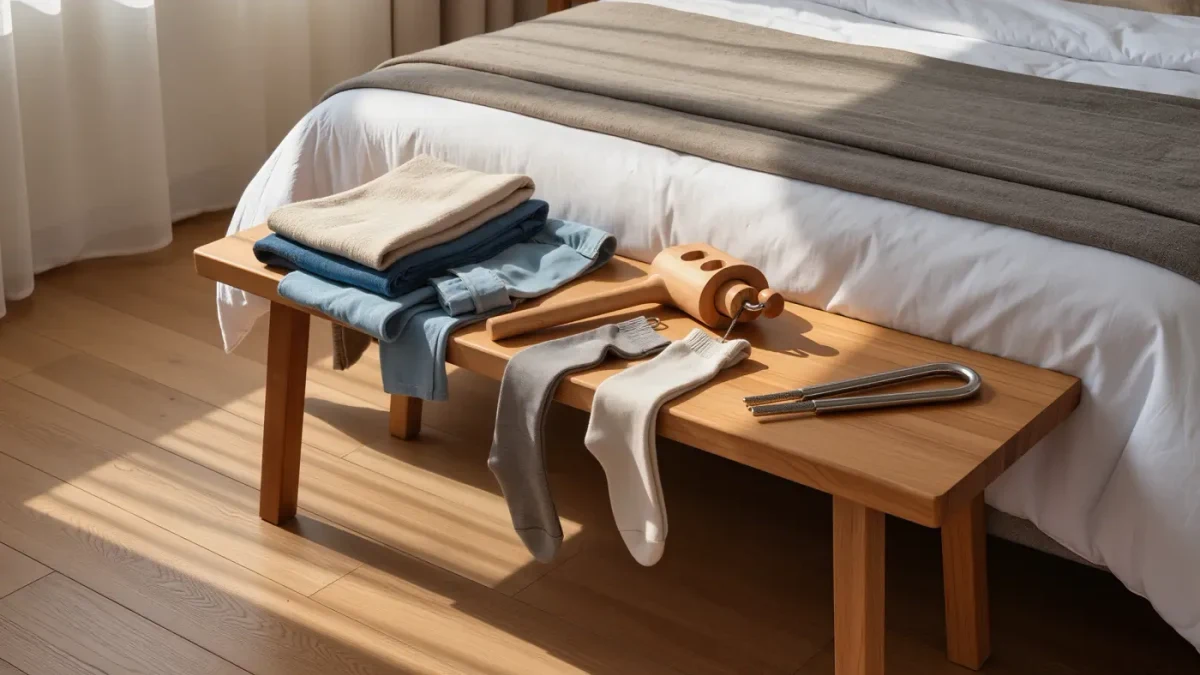
Dressing aids split into four jobs: reaching (dressing sticks and long-handled shoehorns), holding fabric taut (sock and stocking aids), closing (button hooks and zipper pulls), and eliminating fasteners altogether (elastic laces, magnetic closures). Roughly one in four U.S. adults lives with doctor-diagnosed arthritis, per the CDC — the most common reason these tools enter a home, though stroke recovery, limited reach, and balance conditions use the same ones.
If dressing difficulty follows a new diagnosis, surgery, or a stroke, an occupational therapist can match tools to exactly what your hands and shoulders can do — the guide below describes what each device does per manufacturer documentation, not a substitute for that assessment.
What does a dressing stick actually do?
A dressing stick is a lightweight rod with a hook at one end, and it replaces the shoulder range you no longer have. You hook the end through a waistband, a sleeve, or a dropped garment and pull it toward you or guide it up your leg without bending at the hip. Per manufacturer documentation, most models extend your reach by roughly two feet and weigh only a few ounces.
The stick earns its place fastest in three moments: pulling pants up over your hips after threading them to knee height with your feet, retrieving a sweater from a closet hook, and pushing a sleeve off the opposite shoulder at day's end. Combined with a long-handled shoehorn, it removes most of the bending from a typical morning. If balance is the issue rather than reach, the rule changes: sit for every step you can, and keep the stick's jobs to seated ones.
How does a sock aid work, and who should skip it?
A sock aid is a curved plastic or fabric trough that holds a sock open while you slide your foot in, then slips free as the sock rides up — pulled by two long straps, so your hands never reach your feet. Manufacturer documentation describes the same basic design across brands: a flexible or rigid shell, two cotton or cord straps, and sometimes foam handles for a better grip.
It works best for hip or knee limitations, back pain, and post-surgery bending restrictions. It works worst for severe hand weakness, since you still need to load the sock onto the trough and gather the straps. A few practice runs seated on the bed's edge, with the sock stretched fully over the trough, solve most first-week failures. Compression stockings need a sturdier version made for them — a standard aid will not hold that elastic open, and forcing one just launches the sock across the room.
Are button hooks and zipper pulls worth it?
A button hook is a wire loop on a handle: you push the loop through the buttonhole, catch the button, and pull it through — steady pressure instead of a pinch-and-hold. A zipper pull adds a cord or ring to a tiny zipper tab so one finger can haul it closed. Both are among the cheapest aids sold, and both depend on the garment, not just the hand: shirts with loose buttonholes and pants with large ring zippers cooperate; stiff denim and tiny brass zippers do not.
The faster strategy is choosing clothes that skip the fastener entirely. VELCRO-brand and hook-and-loop closures replace buttons on many adaptive shirt and pants lines; pull-on trousers with elastic waistbands remove the zipper from the equation; and magnetic buttons — sewn magnets behind a decorative button — close with a light touch, per adaptive-clothing manufacturer documentation. Most people who dress one-handed end up with hook-and-loop on the daily clothes and a button hook for the clothes they love anyway.
What about shoes and outerwear?
Shoes are a solved problem in most cases. Elastic or coiled no-tie laces turn any lace-up into a slip-on; shoe horns in a 24- to 31-inch length let you step in without bending; and a simple heel loop sewn or bought for the back of the shoe gives you a one-finger pull. If you wear braces or have swelling, look at wide-opening shoes described in manufacturer documentation as extra-depth or bariatric-fit — the point is a shoe that opens far enough that your foot does not have to force its way in.
For coats, the same hierarchy applies: a dressing stick to reach the sleeve, then a zipper pull for the front. Zippers beat buttons in every one-handed closet, and a ring or cord added to the slider is a five-minute fix on the coat you already own.
How do you build the setup without overbuying?
Adaptive-equipment drawers fill up fast because these tools are inexpensive and given as gifts. A better order of operations:
- List the two steps of your morning that cost the most time or frustration — not every step, just the worst two.
- Buy only the aids that touch those two steps; one tool usually covers several garments.
- Practice each new aid seated, on an easy garment, before using it under morning time pressure.
- Rewrite the closet to cooperate: front-facing hooks at standing height, everyday pants pre-threaded on the sock-and-stick routine, fastener-free versions of your weekly outfits.
- Reassess in a month and add a third tool only if a specific garment still defeats the system.
For perspective on the underlying conditions, the CDC's arthritis program tracks how common joint symptoms are and how much they limit daily activity — context that explains why an entire category of dressing equipment exists at every price point. None of it is mandatory; the goal is a morning that takes one hand and no strain.
Should you reorganize the closet and bedroom too?
The tools only work if the room cooperates, so give the layout the same attention as the equipment. Hang everyday clothes on front-facing hooks or a low rod at standing height instead of deep closet shelves that need two hands and full shoulder range. A firm chair with arms beside the bed becomes the dressing station: clothes laid out the night before, sock aid and shoehorn within one seated reach, shoes on an open rack rather than a pile. People who dress one-handed after a stroke are usually taught to dress the weaker side first and undress it last — an occupational therapist can confirm the sequence for your situation, but the room arrangement helps everyone regardless of cause.
Drawer organizers stop small items from sliding to the back, and a photo or tactile marker on each drawer keeps the system usable for anyone else who helps. The point of the whole setup is speed and dignity: a morning that runs on routine rather than on problem-solving before coffee.
Which aids belong in a travel or hospital bag?
Keep a small kit of the four classics: dressing stick, sock aid, button hook, and long shoehorn — together they weigh under two pounds per manufacturer listings and pack flat beside folded clothes. The same kit serves a hospital stay or post-surgery recovery, where bending restrictions are usually temporary and the aids are loaned or purchased inexpensively. Label the bag and rehearse the routine once at home, because unfamiliar rooms and lower beds are where dressing techniques need to be automatic, not improvised.