Your first-time home buyer checklist starts about a year before you want to move. You pull your credit reports, pay down revolving balances, save past the down payment for closing costs and reserves, and get pre-approved before you tour anything. The exact numbers depend on your loan type and lender, so treat any figure you see online as a starting question, not a rule.
This guide runs the process as a calendar. Each season has its own job, and skipping one usually costs you later — either in price, in loan terms, or in a house you cannot actually live in comfortably. If accessibility matters to you or someone in your household, the checklist here adds those checks in early, where they can change which homes you even look at.
Merriam-Webster defines "first" as preceding all others in time or importance, and that ordering is the whole point of this checklist: what you do first determines what options you have last (Merriam-Webster). Start with the unglamorous season.
What should you do a year before buying?
One year out, your job is paperwork and honesty. Request your credit reports from the major bureaus, read every line, and dispute anything wrong. Errors are common enough that this step is worth the hour it takes, and fixing one takes longer than you expect — which is exactly why it belongs in month one, not month ten.
Then look at your debts the way a lender will. Revolving balances relative to your limits matter, as does a clean payment history. Avoid opening new credit accounts or co-signing for anyone during the year before a mortgage application. If you are self-employed or your income is irregular, gather two years of records now; lenders will want them.
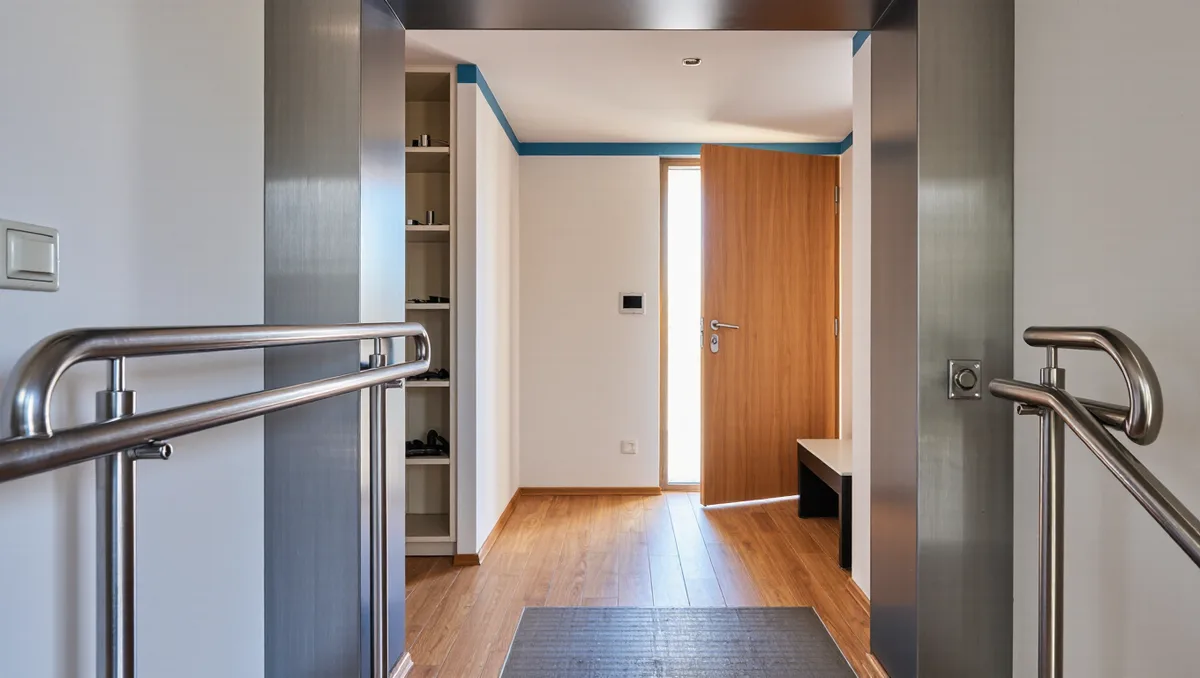
Start a running list of what you actually need in a home. Not the wish list — the non-negotiables. If a household member uses a wheelchair, that list should include step-free entry, doorways and a bathroom you can modify, and a route from parking. Our guide to Visitable Homes: What Zero-Step Entry Really Means explains why a zero-step entrance is the single feature hardest to add later and easiest to screen for now.
What happens six months out?
Six months before your target date, set your savings plan and test it. Figure out what you can genuinely save each month, then live on that number for a couple of months before you commit. A down payment is only part of the cash you need; closing costs, an inspection, moving expenses, and the first round of repairs all come due at once. Lenders also like to see reserves — money left after closing — so a drained account can work against you even with a solid down payment.
This is also the season to learn your loan options. Conventional, FHA, VA, and USDA programs each have different down payment, credit, and property requirements, and first-time buyer programs in many states add down payment help with their own rules. Requirements vary by program, lender, and state, so ask lenders to lay out two or three scenarios side by side rather than accepting the first offer.
Research where you want to live with the same discipline. School data, property tax levels, commute times, and how quickly homes sell in your price band all shape your offer strategy later. For readers weighing accessible stock specifically, our housing section tracks what is on the market and what the programs behind it actually require.
When should you get pre-approved and start touring?
Get pre-approved roughly three months out, once your credit and savings are in final shape. Pre-approval is a lender's conditional commitment based on documented income, debts, and credit — it is stronger than a pre-qualification, which relies on numbers you state yourself. Sellers and their agents read the difference quickly, especially when multiple offers are on the table.
Choose your agent before your first tour. Interview two or three, and ask directly about experience with the features on your non-negotiable list. An agent who has never evaluated a home for wheelchair access will not know to check the slope of a driveway or the clear width of a hallway, and you should not pay a commission to learn that on the job.
Then tour with your checklist in hand, not just your eyes. Photograph doorways, the path from the street or garage, the bathroom layout, and the laundry location. Our room-by-room walkthrough in Buying an Accessible Home: The Checklist Before Closing covers what to measure and what to ask on every visit. Remember that listing language is marketing; our guide to accessible listing terms explains why "accessible" on a listing sheet often means very little without measurements behind it.
What should you check before making an offer?
Before you offer, do three things. First, price the gap between the house as it stands and the house you need. A ranch with a step-free entry and a wide bathroom door may need less work than a cheaper two-story that requires a ramp, a lift, and a ground-floor bath. Our guide to who pays for home modifications outlines the VA, USDA, and Medicaid waiver programs that can offset modification costs for those who qualify, with eligibility stated as each program states it.
Second, budget for the inspection and any specialist follow-ups. A general inspector covers structure and systems; a contractor can price the modifications you have in mind while you are still in your option period. Third, review the seller's disclosures and the home's history for anything that affects your plans — additions without permits, drainage problems, or an HOA that restricts exterior changes such as ramps. HOA rules can block a modification you assumed were yours to make, so read them before you sign, not after.
What happens between contract and closing day?
Once you are under contract, the clock runs on deadlines you agreed to. Stay in close contact with your lender, and do not change anything about your financial life: no new credit cards, no financed furniture for the new house, no job change without telling your lender first. Lenders re-verify credit and employment before closing, and a new car loan in week three has sunk more closings than any inspection finding.
Walk through the property shortly before closing. Confirm any agreed repairs were done, and re-measure the access features that matter most to you. Bring your own tape measure; the seller's staging will not show you whether a hospital bed or a power chair actually fits through that hall. Our modifications guides cover what each common change involves, so your contractor quotes arriving during this window have context.
At closing, expect to sign a stack of documents and bring certified or wired funds for your cash-to-close amount. Read the closing disclosure your lender sends in advance and compare it to the loan estimate you received earlier; discrepancies should be questioned before signing day, not after.
Our analysis: what this means for your first year as an owner
The evidence in any buying process points one way: the buyer who front-loads the work has more choices, and the buyer who does not takes whatever is left. That is true doubly for buyers screening for accessibility, because accessible stock is thinner and moves differently from the general market. Build the calendar, hold the discipline on credit and cash, and put your access requirements in writing before the first tour.
What remains unknown for any individual buyer is the local picture — program availability, inventory, and pricing in your specific market and state.