A low maintenance landscape trades weekly chores for yearly ones. Ground cover instead of lawn, shrubs instead of bedding plants, mulch instead of bare soil, and hardscape where nothing needs to grow at all. Done well, these choices can cut the hours you spend on the yard by half or more — and most of the work happens once, at installation, not every Saturday.
This guide walks through the specific design moves that reduce physical upkeep: what to plant, what to pave, what to automate, and how to plan the work so it fits your reach, your grip, and your energy. Plant choices and care schedules vary by region, so treat the plant names here as examples to check against your local climate rather than a shopping list.
Which design changes reduce yard work the most?
The biggest single saving is removing lawn. Mowing, edging, and grass watering are the most frequent tasks in any yard — weekly during the growing season in most climates. Every square foot you convert to a shrub bed, ground cover, or paved area is a square foot you no longer mow, edge, or fertilize.
Native planting comes second. According to LawnStarter's New York landscaping guide, incorporating natives such as coneflowers, prairie grasses, and milkweed lowers maintenance needs while supporting local pollinators. Plants that evolved in your region generally need less watering, less fertilizer, and less fussing than exotic ornamentals once they are established.
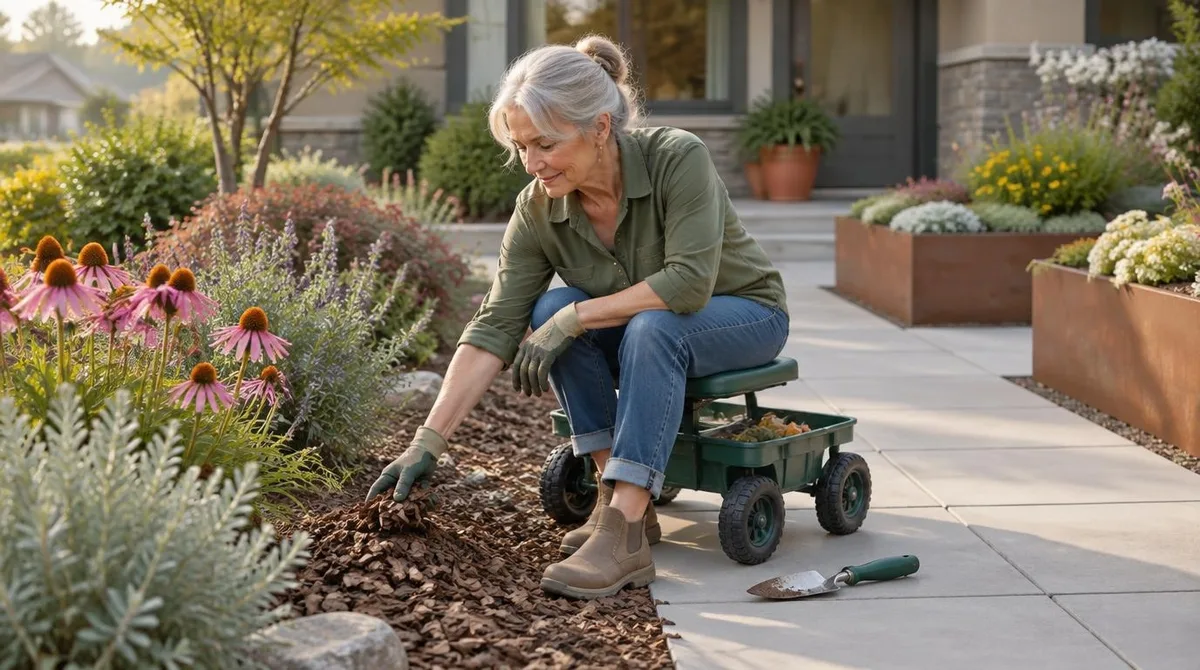
Third is mulch. The same guide recommends adding 2 to 3 inches of mulch around beds to retain moisture and suppress weeds. A thick mulch layer means you water less and pull weeds far less often — two of the most physically demanding recurring jobs in the garden.
What should replace a lawn you no longer want to mow?
You have several options, and the right one depends on how you use the space and how much installation work you can take on at once.
- Ground covers. Low, spreading plants such as creeping thyme, sedum, or native sedges form a living carpet. They need occasional trimming or weeding but no mowing schedule.
- Hardscape. Patios, stone paths, and gravel areas need no watering at all. LawnStarter's seasonal guide notes that bluestone and natural-stone pavers create durable foundations for outdoor living — and a swept or rinsed patio is one of the easiest surfaces to maintain.
- Shrub and perennial beds. Deep-rooted woody shrubs and clumping perennials hold their ground for years. Prune once a season and refresh mulch once a year.
- Artificial turf. Some landscaping firms, such as the companies listed on HomeGuide's New York landscaping directory, specialize in artificial turf installation. It eliminates mowing and watering entirely, though it needs occasional rinsing and eventually wears out.
If you use a wheelchair or walker, hardscape deserves a closer look. A firm, level path or patio doubles as an accessible route through the garden. Slope, landing, and surface requirements for accessible outdoor routes follow the same logic as ramp design — our guide to outdoor ramp slope and landing requirements explains the numbers to aim for. This connects to our earlier piece, Outdoor Ramp Slope and Landing Requirements, Explained.
How do you design beds for limited reach and mobility?
Layout matters as much as plant choice. A bed you can reach from a seated position or from a firm path edge is a bed you can actually tend.
- Make beds shallow, not deep. Keep planted borders no more than about two feet deep where they back onto a path, so you can reach the middle without stretching or stepping on soil.
- Build raised planters. A raised bed at bench or table height brings the soil to you and saves bending. Legs wide enough for knee clearance underneath let a seated gardener roll up close.
- Choose a reachable watering method. Drip irrigation on a timer, a spigot at an easy height, or lightweight hose reels all beat dragging a heavy can across a lawn. Smart, Wi-Fi-enabled irrigation controllers adjust watering schedules automatically — a trend LawnStarter flags as popular in city landscapes because it reduces runoff and keeps plants healthy without daily attention.
- Group thirsty plants together. Clustering plants with similar water needs means one zone, one timer, one hose run — instead of watering the whole yard piecemeal.
- Pave your work routes. Firm paths beside every bed keep wheels and feet out of mud and make weeding, pruning, and harvesting possible in any weather.
Which plants ask for the least care?
The reliable low-care categories are the same almost everywhere, even though the specific species change with your climate.
- Native perennials. Once established, plants native to your region typically handle local rainfall and pests on their own. Coneflowers, milkweed, and prairie grasses are the examples LawnStarter gives for New York; your local extension office can name the equivalents where you live.
- Ornamental grasses. They need one cutback a year, in late winter, and nothing else.
- Woody shrubs. A well-chosen shrub fills space for decades with a single annual pruning. Dwarf varieties spare you shearing altogether.
- Evergreen structure. Pines, junipers, and similar evergreens give year-round form with essentially no maintenance — LawnStarter's winter list recommends them precisely for year-round structure and color.
What to avoid: annual bedding plants, which need replanting every year; hedges that demand regular shearing; and anything sold as fast-growing, which usually means frequent pruning. A plant that outgrows its spot is a plant you will be fighting every season.
What does the seasonal calendar look like after the redesign?
A low maintenance yard still has seasons — but the list is short, and most tasks are annual rather than weekly.
- Spring: refresh mulch, cut back any grasses left standing over winter, and check the irrigation system before the growing season — LawnStarter suggests installing or checking automated systems before the busy season.
- Summer: water deeply and infrequently, ideally early morning, so roots grow strong. Spot-weed the mulched beds; a 2-to-3-inch mulch layer keeps this light.
- Fall: one leaf cleanup, and plant spring bulbs if you want them. Add mulch before the first frost to insulate roots.
- Winter: prune dormant shrubs and small trees while sap flow is slow, and keep walkways cleared of snow — LawnStarter notes prompt snow shoveling also protects stone and concrete surfaces.
Notice what is missing: no weekly mowing, no edging, no weekly deadheading. If even the short list is more than you want to handle, scheduled help is a normal part of the plan. Services in most areas offer weekly, bi-weekly, or monthly visits covering everything from pruning to mulch — GreenPal's directory of New York landscapers describes that range of scheduled maintenance options — and hiring out the two heaviest tasks (leaf removal and mulch delivery) often costs less than a full maintenance contract.
What this means for your budget and your plan
Our analysis: think of a low maintenance landscape as a one-time purchase that pays you back in hours. Hardscape, raised beds, irrigation, and mature shrubs cost more up front than a lawn and a few annuals. But every dollar moves work off your weekly calendar and onto a once-a-year list — and for a gardener with limited mobility, that difference is the difference between enjoying the yard and dreading it.
Start small and sequence it. Convert one bed this year, add drip irrigation next, replace the hardest-to-mow strip of lawn after that. If accessible routes through the yard are part of the project, our guide to ramp slope, materials, and when to DIY covers the same build-or-hire decision for the vertical parts of the landscape. And if the redesign connects to a bigger round of home changes, our Modifications hub gathers the rest of the guides — doors, bathrooms, kitchens, and funding — in one place. For related coverage, see Wheelchair Ramp Building — Ramps: Slope, Materials, and When to DIY.
One caution before you hire: this article is general information, not a recommendation of any specific company, and directories such as the ones cited here are advertising platforms, not independent testers. Get several written quotes, check references, and confirm any contractor's licence and insurance with your state or locality before work begins.