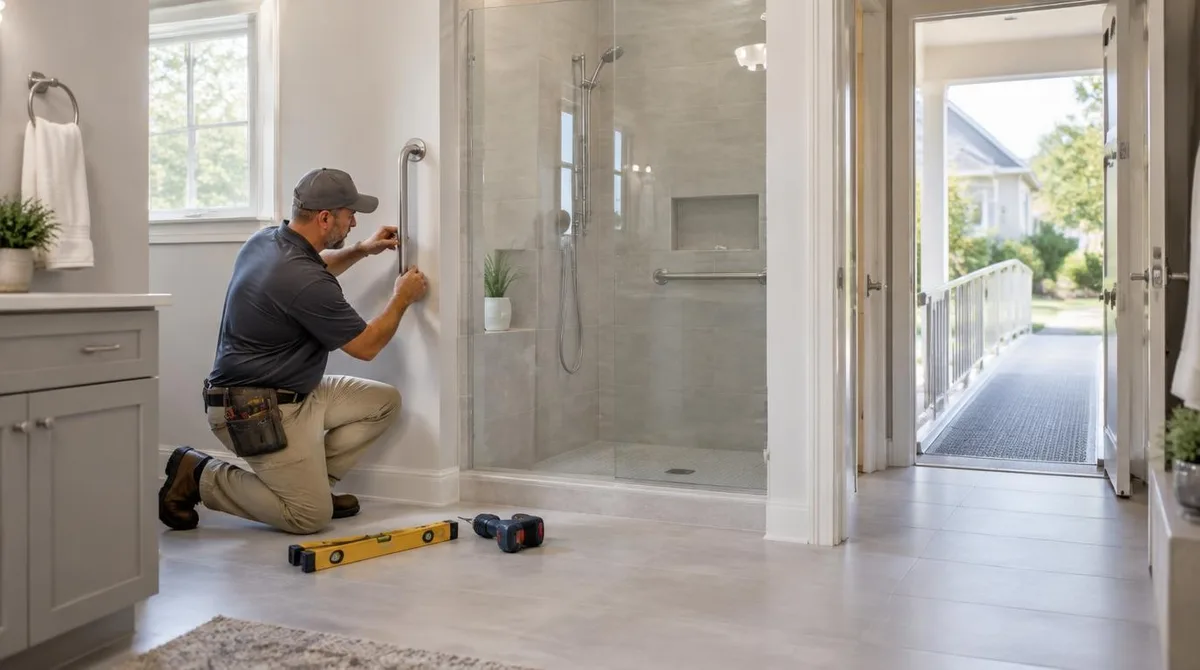
Home modifications are changes to a house that make daily routines safer and easier — ramps instead of steps, grab bars where you need them, doorways wide enough to pass through, and lighting that keeps hazards visible. Most projects fall into a few familiar groups: getting in and out, moving between rooms, bathing safely, and working around the kitchen. The right list for your home depends on how you actually move through it, which is why the first step is walking your own floor plan, not browsing a catalog.
Costs and rules vary a lot. A grab bar is a modest job; a roll-in shower or a widened doorway touches plumbing or structure and needs a contractor. Requirements also differ by jurisdiction and building type — what a public building must meet under the Americans with Disabilities Act (ADA) design standards is not what the Fair Housing Act (FHA) design requirements ask of an apartment, and local permit rules add their own layer. This piece is information to help you plan, not advice on your specific case. We covered a connected angle in Doorway Widening Cost — Doorway Widening: What Your Contractor Should Know.
Which home modifications matter most for safety?
Start where injuries happen. Bathrooms, stairs, and thresholds are the spots where a small change buys the most safety. A grab bar beside the toilet and inside the shower, a curbless or low-threshold shower entry, and a second railing on the stairs are the classic short list. Good lighting belongs on it too: a lit path from bedroom to bathroom and switches reachable without reaching across a room.
The reason to start with safety rather than convenience is sequencing. If a bathroom rebuild is on your list eventually, install the temporary aids — a grab bar, a shower chair, better lighting — now, and plan the bigger job with the right placement in mind. You can find exact heights and spacing in our grab bar placement guide, which covers what the standards say.
What does each common project actually involve?
Each modification differs in how much of the house it disturbs. Here is the practical breakdown, from least to most invasive.
- Grab bars and handrails. Mounted into wall blocking or studs so they hold real weight. Fast to install once placement is decided, but placement matters more than the hardware.
- Lighting and switches. Motion-activated lights on stairs and pathways, rocker-style switches, and lever door handles instead of knobs. Mostly electrical work, often done in a day.
- Threshold and doorway ramps. A small ramp or beveled threshold solves a single raised doorway. For the full range, see our threshold and doorway ramps mini guide.
- Exterior ramps. Slope, landings, materials, and often a permit. Our guide to outdoor ramp slope and landing requirements explains the geometry, and another covers when a ramp is a DIY job and when it is not.
- Doorway widening. Cutting into framing, sometimes relocating wiring or plumbing. It is structural work with a contractor, and our doorway widening guide covers what your contractor should know.
- Bathroom conversions. A roll-in shower replaces a tub or a high-threshold stall; a walk-in tub is the other common option. The choice between them is genuinely situational — our walk-in tub vs. roll-in shower comparison walks through it.
- Kitchen and vertical access. Lowered counters, and for stairs, stairlifts or lifts. Costs rise sharply here, and options trade off against each other.
One planning note from the street-level view: measure before you buy anything. Clear width is what a wheelchair user actually needs, not the door slab size, and hallway width constrains what a doorway widening can achieve. Our hallway widening guide covers the structural basics, and our flooring guide matters more than most people expect — thick carpet defeats a doorway you just widened.
How much do home modifications cost?
Costs scale with how much of the house the work touches. A grab bar and a lever handle sit at the low end; a doorway widening sits in the middle because it involves framing; a full bathroom conversion sits at the top because plumbing, waterproofing, and flooring all change at once. Ramps vary with length — the rise of your entrance sets the ramp length, and a long ramp means more material and more site work. For related coverage, see Wheelchair Ramp Building — Ramps: Slope, Materials, and When to DIY.
Three factors move the number more than the project type itself. First, structure: load-bearing walls and slab foundations make simple jobs slower. Second, permits: exterior ramps and anything touching plumbing or electrical usually need one, and permit timelines vary by town. Third, sequencing: doing the bathroom once, with grab bar blocking installed behind the wall even if you add the bars later, costs less than opening the same wall twice.
Get itemized written estimates from at least two contractors, and check that each quote lists the same scope — a quote that excludes disposal or permits is not cheaper, only thinner. Our kitchen counter guide shows how a single project's cost range depends on plumbing and cabinet choices, which is a good model for reading any estimate.
What funding options exist for accessibility work?
Funding depends on where you live, your tenure, and the program. The general categories:
- Veterans programs. The Department of Veterans Affairs runs grant programs for service-connected disabilities that fund home modifications; eligibility terms are specific and stated by the VA, so read the program page rather than a summary.
- Medicaid waiver programs. Some state Medicaid waiver programs cover home modifications as part of home-based care, with eligibility rules that vary by state and by program.
- State and local programs. Many states and cities run weatherization or home-repair programs that can include accessibility items. Our weatherization guide covers what that program funds for accessible homes.
- Landlord arrangements. If you rent, modifications are usually a negotiation with the property owner. Our lease-friendly modifications guide explains how landlord sign-off typically works, and our modifications vs. accommodations explainer covers the difference that determines who pays and who approves.
Because program rules change and eligibility is individual, treat any funding list as a starting point. Name the program, read its own eligibility page, and confirm the current rules before you plan a budget around it.
How do you choose and check a contractor?
Accessibility work rewards contractors who have done it before. A bathroom conversion is ordinary plumbing plus unusual clearances; a contractor who has never built a roll-in shower will learn on your budget.
- Define the scope in writing. Dimensions, fixtures, finishes, and who handles permits. Vague scopes cause most disputes.
- Verify licensure and insurance for your state. Requirements vary by jurisdiction, so check what your state or city requires for the trade involved.
- Ask for accessibility-specific references. A prior roll-in shower or ramp says more than a decade of general remodeling.
- Plan the blocking. Ask where grab bar blocking, future lift mounts, or reinforcement will go. Behind-the-wall work is cheap now and expensive later.
- Keep the permit. Permitted work protects you at resale and with insurers. If a contractor suggests skipping the permit, that is information about the contractor.
The objection worth hearing: some owners worry that accessibility work makes a home harder to sell or looks institutional. In practice, good accessible design — a curbless shower, wider openings, lever handles — reads as good design to most buyers, and an aging population keeps demand steady. The risk is not modification; it is modification done badly.
What this means for your plan
Walk your home and list the friction points honestly: where you steady yourself, where the light is poor, where a threshold fights you. Rank them by risk, not by cost. Handle the cheap safety items quickly, get professional input before any structural or plumbing work, and check funding programs before you commit to a budget. A home, as Wikipedia's overview of the concept notes, is the space where domestic life — sleeping, eating, hygiene, work, and leisure — actually happens; the point of every modification on this list is to keep those routines running in the place you already live.