A vertical platform lift typically costs $15,000 to $30,000 installed, while a home elevator runs $30,000 to $60,000 or more installed, per industry ranges as of early 2026. The lift moves you between levels on an exposed platform along a wall; the elevator travels in a shaft and serves three or more floors. Your home's layout and budget decide it.
What Is the Real Difference Between the Two?
A vertical platform lift, or VPL, is a motorized platform that travels straight up a guideway mounted to a wall or its own tower. You roll or step on, press a hold-to-run control, and the platform rises the distance, usually 14 feet or less in residential models. Manufacturers such as Savaria and Harmar document residential VPL travel up to about 14 feet depending on the model.
A home elevator is a cab in an enclosed hoistway, riding on rails with a drive system, doors at each landing, and full push-button controls. Residential elevators follow the ASME A17.1 safety code, Safety Code for Elevators and Escalators, which most states adopt for residential elevator permitting and inspection. Platform lifts are covered by ASME A18.1, Safety Standard for Platform Lifts and Stairway Chairlifts.
In practice: the lift is a spot tool for one level change. The elevator is a whole-house system.
How Do Costs and Installation Compare?
Expect typical installed costs, as of early 2026, of roughly $15,000 to $30,000 for a VPL and $30,000 to $60,000-plus for a home elevator, with pit construction, hoistway framing, and electrical work driving the elevator figure higher. Two-story shaftless elevators sometimes land between the two ranges. Get at least three itemized quotes.
| Factor | Vertical Platform Lift | Home Elevator |
|---|---|---|
| Typical installed cost (early 2026) | $15,000-$30,000 | $30,000-$60,000+ |
| Typical travel | Up to ~14 ft, one level | 2-4 stops, 40-50 ft depending on model |
| Footprint | ~4x4 ft to 5x5 ft at each landing | ~5x4 ft cab plus hoistway, ~12-15 sq ft per stop |
| Ride time, one floor | ~30-45 seconds | ~20-35 seconds |
| Structural work | Wall or tower mounting, 240V circuit | Hoistway framing, pit or zero-clearance pit, dedicated power |
| Resale effect | Niche; some buyers see it as equipment | Often marketed as a home feature |
Costs vary by region, layout, and code requirements in your jurisdiction; treat these as planning ranges, not quotes.
Which One Fits Your Layout?
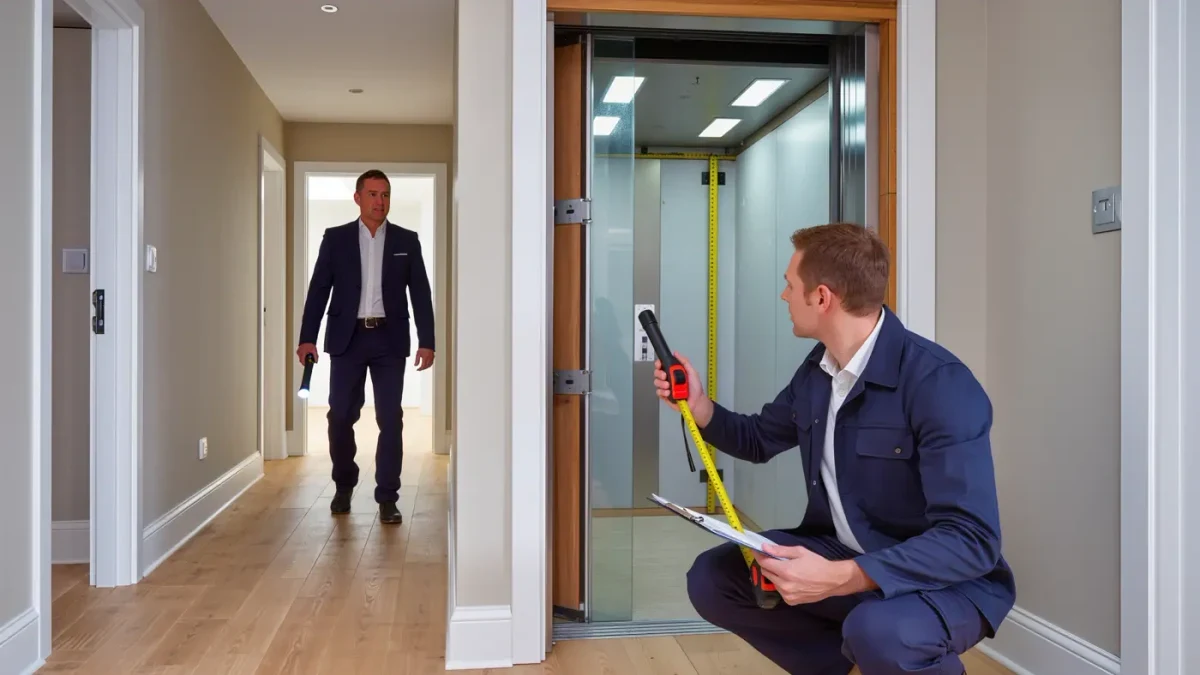
Measure before you shop. Ask these questions in order:
- How many stops do you need? One level change favors a VPL; three or more strongly favors an elevator.
- How much vertical distance? Above roughly 14 feet, most residential VPLs are out of range, per manufacturer specifications.
- Where can the footprint go? A VPL needs a landing area at top and bottom with level approach; an elevator needs a continuous hoistway through every floor.
- Does your ceiling and floor structure allow a pit or reinforcement? A contractor or structural engineer answers this, not a sales brochure.
What Do the Accessibility Standards Actually Require?
Neither device is required in a private single-family home by federal accessibility law, and that caveat shapes everything. The ADA 2010 Standards for Accessible Design apply to public accommodations and commercial facilities, not your living room. Section 410 of the 2010 Standards permits platform lifts in existing buildings as part of an accessible route, and section 409 sets running slope for ramps and lifts used on accessible routes.
Where standards do reach homes: the Fair Housing Act design requirements, administered by HUD under 24 CFR 100.205, cover accessible routes in covered multifamily buildings built for first occupancy after March 1991, but an elevator installed for a resident's own use is a modification, negotiated with the owner, not a baseline requirement. ANSI A117.1, the model accessibility standard referenced by many building codes, addresses platform sizes and controls you can mirror in a home design. Local building codes and permits govern the actual installation, and they vary by jurisdiction.
What About Safety, Maintenance, and Power?
Both devices include safety systems documented by manufacturers: VPLs carry non-skid platforms, constant-pressure controls, and safety pans or obstruction sensing under the platform; elevators add hoistway door interlocks, emergency lowering, and in many models a battery backup that lowers the cab during an outage. Check the specific model's spec sheet, because backup power is an option on some lines and standard on others.
Budget for upkeep. Industry service pricing as of 2025 typically runs $200 to $500 per year for a lift maintenance visit and $300 to $600-plus for an elevator, more in markets with fewer certified technicians. Ask each dealer who services your area and how quickly they respond, because a dead device between floors is a real problem.
What Do Installers Mean by Shaft, Hoistway, and Pit?
Knowing the vocabulary keeps quotes comparable. A hoistway is the enclosed shaft the elevator cab travels through; it is framed into your house, which is why elevators cost structural money. The pit is the shallow recess below the lowest landing that gives the cab clearance, though several current residential models are built with zero-clearance pits that sit on the finished floor, per manufacturer documentation. A VPL needs neither: its guideway bolts to a wall or a self-supporting tower, and the platform parks at floor level. Ask each bidder to state exactly which structural work their number includes — hoistway framing, pit work, electrical, and finish carpentry are the line items where quotes diverge most, and the lowest sticker price often excludes two of the three.
How Does Each Choice Affect Resale?
An elevator reads as an amenity to a broad set of buyers, and appraisers in some markets credit it. A VPL reads as durable medical equipment to some buyers and can be removed, leaving patchable wall anchors and an electrical circuit. If you expect to sell within a few years, ask a local appraiser how each option has affected comparable sales in your market; the answer is local, not national.
Which Should You Choose?
Choose the VPL when the need is one level change, space is tight, and budget matters most. Choose the elevator when you need multiple stops, want a device that reads as a home feature, or expect changing needs over many years. Then verify everything against your own layout:
- Confirm travel distance and stops with a site measurement.
- Get three itemized quotes including permits, electrical, and structural work.
- Ask each dealer for the manufacturer spec sheets on capacity, travel, and backup power.
- Check your local permit requirements before signing anything.
Requirements and costs vary by jurisdiction, home structure, and model year, so treat every number here as a starting point for your own quotes, not a promise.