Organizing a home for low vision comes down to four systems: high contrast between objects and backgrounds, layered lighting that cuts glare, a fixed location for every item, and labels you can read — bump dots, large print, or recorded voice tags. The National Eye Institute projected U.S. low vision to grow from about 2.9 million people in 2010 to roughly 5 million by 2030, which is why these techniques now appear in mainstream home design, not just rehabilitation clinics.
Low vision has many causes, and an eye-care professional or a low-vision specialist should guide your individual tools — this guide covers the organization and layout side, which works alongside whatever devices your care team recommends.
Why contrast does more work than anything else you can buy?
Your eye detects an edge before it reads a shape, so the cheapest modification in a low-vision home is a color change. A dark cutting board on a light counter, a white mug on a dark table, a colored tape stripe on a clear glass door — each turns an invisible object into a defined one. The National Eye Institute's living-with-low-vision guidance emphasizes contrast and lighting as the two most effective home adjustments, ahead of any electronic device.
Walk each room and list the near-invisible hazards first: glass shower doors, clear drinking glasses on a patterned counter, a light switch the same color as the wall, the top stair blending into the hallway carpet. Fixes are immediate — a contrasting shower decal, dark mats under light dishware, switch plates in a different shade, a strip of high-contrast tape on the last stair's nosing. Per the NEI, changing contrast at hazards beats adding brightness, because glare can make low vision worse, not better.
How should lighting be layered in each room?
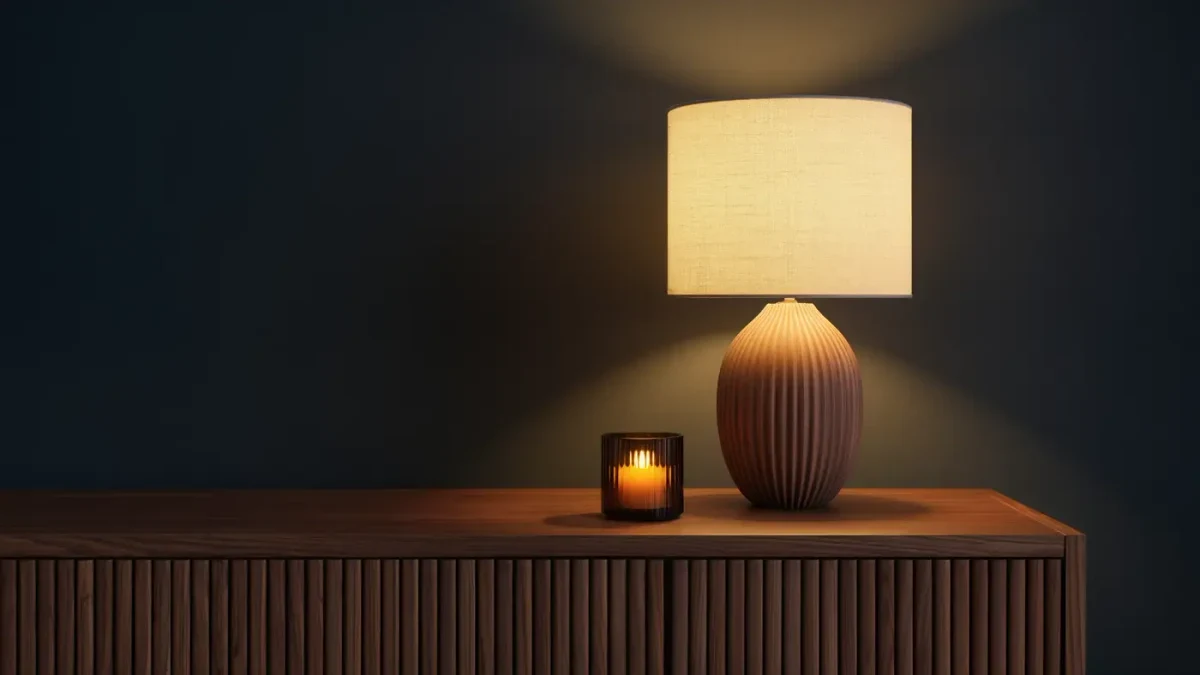
One overhead fixture is the enemy of usable sight. Build each room in three layers: general light for safe movement, task light aimed exactly where work happens, and night lighting on the path from bed to bathroom. Under-cabinet strips in the kitchen, a gooseneck lamp at the reading chair, and motion-sensor plug-in night lights along the hallway cover most homes for a modest budget.
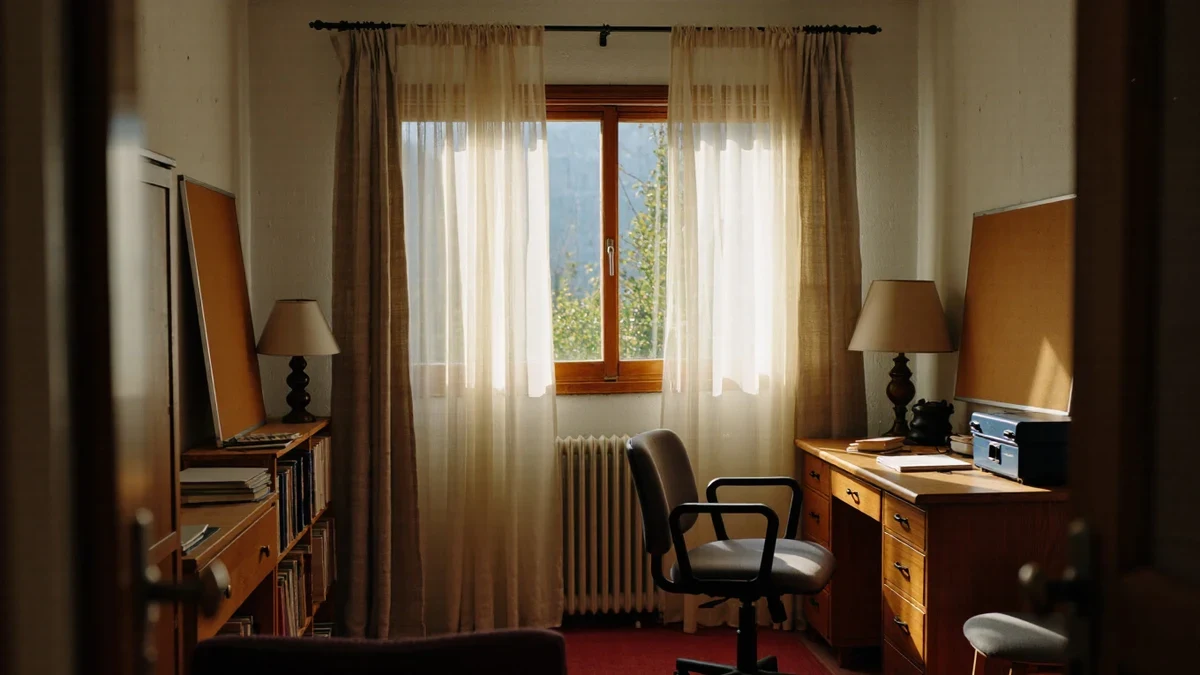
Position light sources beside or behind you, never facing you, and choose shades that hide the bare bulb — glare scattered across a shiny floor reads as a blank wall to many low-vision eyes. Matte finishes on counters and floors reduce bounce. Dimmers let you tune each room as daylight shifts, and daylight-spectrum bulbs in the task lamps generally render detail better than warm tones; the NEI's guidance on home lighting recommends adjustable, glare-controlled task light for close work.
What does a fixed-location system involve?
The core rule: everything lives in one place, always, and nothing sits on the floor. Your memory becomes the navigation system — a chair that migrates across the living room is a collision, and shoes left by the door are a trip. This costs nothing and changes everything, which is why low-vision rehabilitation specialists teach it before any equipment discussion.
- Assign every frequently used item a home within arm's reach of where it is used.
- Return items to that home every single time — the one exception breaks the system.
- Cabinet doors and drawers are fully closed or fully open, never half.
- Chairs, wastebaskets, and cords stay in fixed spots away from walking lines.
- Floors stay clear; if it cannot be stored, it does not belong in the traffic path.
Communicate the system to everyone in the household. A well-meaning guest who relocates the coffee maker has disabled the whole method.
How do you label things you cannot read?
Labeling works in tiers, matched to what your eyes can still resolve. Bump dots — small raised adhesive dots sold at hardware and specialty stores — mark the 350-degree point on an oven dial and the start button on a microwave, readable by fingertip. Large-print labels in bold sans-serif type on high-contrast tape mark pantry containers. Voice-recording tags and smartphone apps that speak printed text handle everything else, per manufacturer documentation for the major labeling products.
In the pantry and medicine cabinet, consistency beats detail. One tactile marker on all breakfast items, two on baking supplies; a rubber band around your own medication bottle to distinguish it from a housemate's. Never rely on pill size or color alone to identify medicine — the National Eye Institute's daily-living guidance flags medication mix-ups as a leading home-safety risk with low vision, and a pharmacist can supply large-print labels on request.
Which room-by-room changes pay off fastest?
Kitchen: contrasting cutting boards and dishware, bump dots on dials, clear counters, and frequently used items at waist height. Bathroom: contrasting towels and bath mat against the floor, a raised-color toilet seat or lid contrast, grab bars in a color distinct from the tile. Hallways and stairs: continuous contrast striping at level changes, night lights, and handrails on both sides where possible. Bedroom: a nightstand that holds lamp, phone, and glasses in the same spots every night, with a contrasting bedspread that makes the bed's edge easy to find.
Electronics deserve their own pass: set every screen to large text and high-contrast mode, enable voice assistants on speakers and phones, and standardize charging stations so devices are always in one powered, findable place. The FCC's accessibility resources document requirements for phone and TV accessibility features, which apply as rights rather than purchases in many cases.
Do you need a professional assessment?
How do you keep the system working over time?
A low-vision home is maintained, not finished, and the maintenance is mostly habit. Run a monthly contrast check: replace washed-out tape stripes, re-stick bump dots that have lifted, and swap any new purchase that blends into its background for a version that does not. When something is used up, its replacement goes into the same spot with the same label — a new shape of shampoo bottle in the same spot is a hazard, not a refresh. Quarterly, walk the traffic paths at dusk with the night lighting on and note where shadows hide an edge or a piece of furniture.
A low-vision specialist or occupational therapist can walk your home and spot what a checklist misses — lighting angles, glare sources, hazards specific to your eye condition. State agencies and many nonprofits fund home assessments and sometimes the equipment, with eligibility set by each program. Combine that visit with the systems above and you get a home that works with your sight instead of against it: contrast where you need edges, light where you need detail, and a place for everything you can find without seeing it at all.