The Fair Housing Act makes it illegal for a landlord to refuse to rent to you, charge you more, or treat you differently because of a disability — and it goes further: it requires reasonable accommodations in rules and policies, and it gives you the right to make reasonable modifications to your unit, per 42 U.S.C. 3604(f). You can file a complaint with HUD within one year of the violation, or a lawsuit in federal court within two years.
This guide explains what the law says in general terms; for your specific situation, contact a fair housing organization, a legal aid office, or a fair housing attorney. State and local fair housing laws can be broader than the federal act, and deadlines are strict.
Who counts as having a disability under the Fair Housing Act?
The federal definition is broad. Under 42 U.S.C. 3602(h), a person with a disability is someone with a physical or mental impairment that substantially limits one or more major life activities, someone with a record of such an impairment, or someone regarded as having one. Major life activities include walking, seeing, hearing, breathing, caring for yourself, and thinking, and the definition covers conditions that are episodic or in remission if they substantially limit a major life activity when active.
You are not required to disclose a diagnosis on an application, and a landlord may not ask medical questions of applicants or tenants. A landlord may ask for disability-related information in exactly one situation: when you request an accommodation or modification and your disability or your need for what you asked is not obvious. Even then, the request goes to whether the need exists, not to the diagnosis itself.
What is a reasonable accommodation?
An accommodation is a change in rules, policies, or services so that a person with a disability can use and enjoy their home on equal terms. The Joint Statement on Reasonable Accommodations issued by HUD and the Department of Justice on May 17, 2004 is the main guidance document, and it lists common examples: a reserved parking space when the landlord does not assign spaces; permission to have an assistance animal despite a no-pets policy; a change in the rent-payment date tied to benefit payment dates; a large-print or emailed lease for a tenant with low vision.
An accommodation must be reasonable, which in practice means it does not impose an undue financial and administrative burden on the landlord or fundamentally alter the nature of the housing. The landlord must weigh the request case by case; a flat refusal without considering alternatives is itself evidence of a violation. If the landlord says no, they should explain why, and a dialogue over alternatives — a different parking spot, a different accommodation achieving the same result — is part of the legal expectation.
What is a reasonable modification?
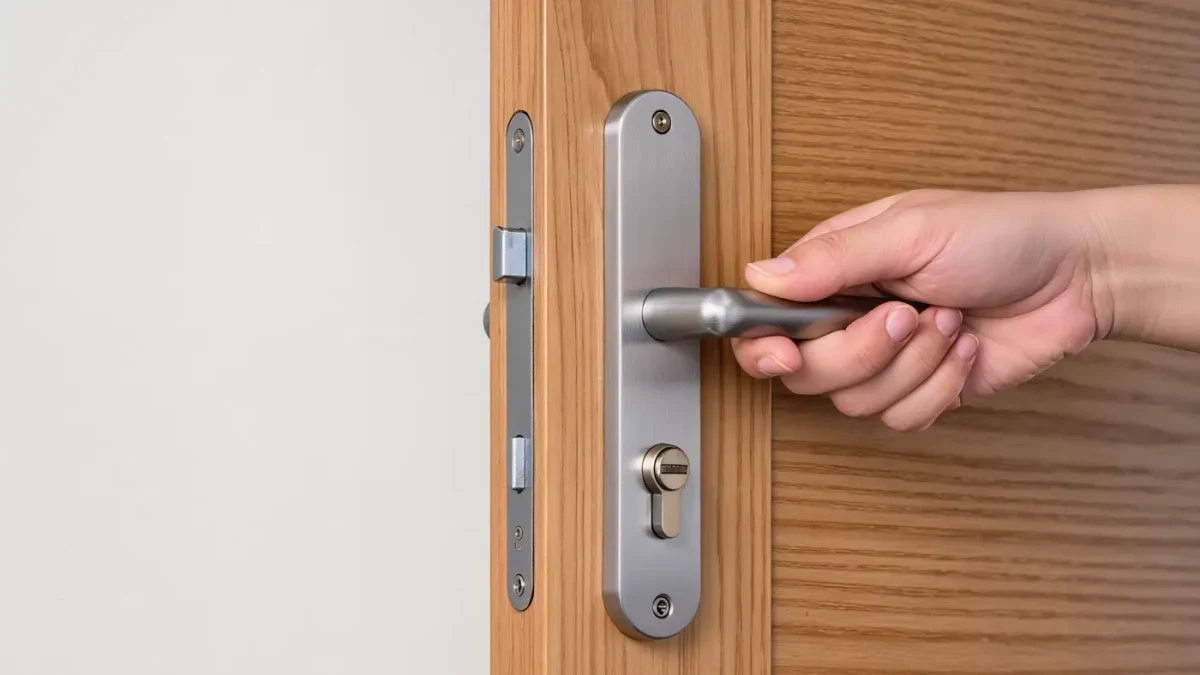
A modification is a physical change to the premises: a ramp at the entry, grab bars in the bathroom, lever door handles, a roll-in shower, a lowered peephole. Under the act, the tenant generally pays for modifications to private-market housing, and the landlord must allow them if they are reasonable and needed for the tenant's full use of the dwelling.
| Request type | What it changes | Who usually pays |
|---|---|---|
| Reasonable accommodation | Rules, policies, or services — parking, mail delivery, lease format | Landlord, as part of normal operations |
| Reasonable modification, private market | Physical structure — ramps, grab bars, handles | Tenant, generally; landlord may require restoration of interior changes at move-out |
| Reasonable modification, federally assisted housing | Physical structure | Housing provider in many cases, per HUD/DOJ guidance |
| Assistance animal exception | No-pets policy, pet fees, and deposits | Landlord absorbs; fees and deposits for assistance animals are not permitted |
For interior modifications, a landlord may require you to restore the unit to its original condition when you move out — reinstalling a vanity cabinet you removed, for example. They may not require restoration of exterior changes like a ramp entrance, since the modification benefits future tenants. A landlord may also require reasonable conditions, such as a building permit for structural work and a plan that complies with code, but may not use conditions to block the modification itself.
What about assistance animals?
Under HUD's assistance animal guidance (FHEO Notice 2020-01, issued January 28, 2020), an assistance animal is not a pet. It is an animal that works, assists, or provides disability-related support, with or without formal training. A landlord must waive a no-pets rule for a qualifying assistance animal, and may not charge pet fees, pet rent, or pet deposits for it — breed and weight restrictions for pets do not apply either.
What a landlord may ask depends on the animal. For a service animal, where the disability and the need are apparent or already documented, the HUD guidance says generally no documentation may be required. For other assistance animals, if the disability or need is not apparent, the landlord may request reliable documentation of the disability and the disability-related need — typically a letter from a health professional or, per the 2020 guidance, for emotional support animals, from a licensed health care professional. An internet certificate is not required and is not, by itself, reliable proof of anything; you do not need to pay for one.
What questions can a landlord not ask you?
The Fair Housing Act bars disability-related inquiries at every stage. A landlord may not ask whether you have a disability, what it is, how severe it is, whether you use a wheelchair or other equipment, or whether you have ever been treated for mental illness. They may not ask for medical records. On an application, questions about impairments, medications, or treatment history are presumptively violations.
Landlords may ask neutral questions of everyone: whether you meet income requirements, whether you can meet the obligations of tenancy, and — only if the answer would be yes for any applicant — whether your use of illegal drugs currently interferes with others' safety or right to peaceful enjoyment. Current illegal drug use is excluded from protection; past use and participation in treatment programs are not. A person whose tenancy would constitute a direct threat to others, or whose request would impose an undue burden, is outside protection on those specific grounds only, and the landlord bears the burden of showing it.
What does a good request look like in writing?
Put every accommodation and modification request in writing, even if the conversation starts verbally. A good request is short and specific, and it does two things: names what you need and ties it to your use of the home.
- State who you are and the unit you occupy or are applying for.
- State the request plainly: "I am requesting permission to install grab bars in the bathroom" or "I am requesting a reserved accessible parking space."
- Say that you are a person with a disability and that the request is needed for full use of the dwelling — you do not need to name a diagnosis.
- Offer documentation if your need is not obvious, or state that you will provide it on request.
- Keep a dated copy, and follow verbal conversations with a confirming email the same day.
If the landlord denies the request, ask for the denial and the reason in writing. That letter becomes the central document in a complaint — and often, landlords revise their answer once a request is documented.
How do you file a fair housing complaint?
You can file a discrimination complaint online, by phone, or by mail with HUD's Office of Fair Housing and Equal Opportunity, within one year of the violation. Many states and cities have their own fair housing agencies with the same or longer deadlines and, in some cases, stronger protections; HUD refers filed complaints to those agencies when they are certified. You can also go to federal court under 42 U.S.C. 3613 within two years of the violation, regardless of whether you filed with HUD.
A HUD complaint triggers an investigation; HUD may also try conciliation — a negotiated settlement — at any point. If HUD finds reasonable cause to believe a violation occurred, the case goes to an administrative hearing or to federal court, where civil penalties and damages are available. Penalty amounts adjust annually with inflation, so check the current figures on HUD's site rather than older articles that quote fixed dollar amounts.
Where can you get help without hiring a lawyer?
Help is free in most parts of the country. Your local Center for Independent Living and state or local fair housing organizations take intake calls, help draft requests, investigate testing, and often represent complainants at no cost. Legal aid offices handle fair housing cases for income-qualified tenants, and law school clinics take them as well. The Department of Justice's Housing and Civil Enforcement Section handles pattern-or-practice cases — systemic discrimination by landlords or developers — and accepts tips that support those cases.
FAQ
These questions come up most often when renters exercise fair housing rights.