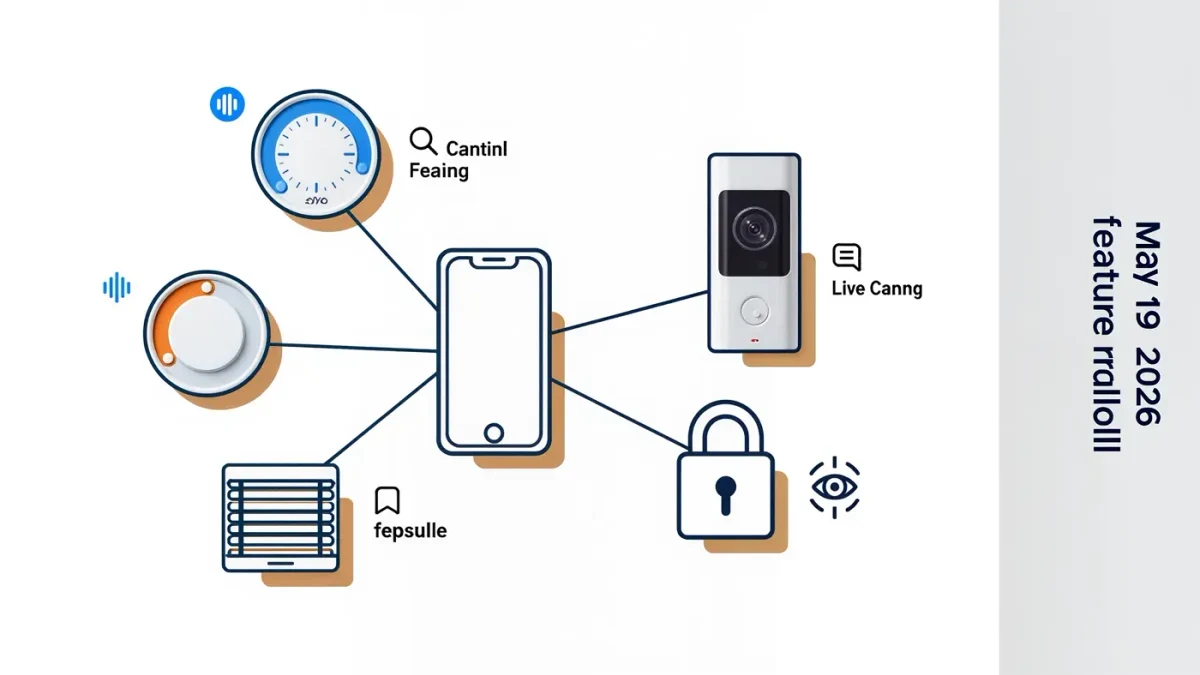
The biggest assistive technology news for home users in mid-2026 came May 19, 2026, when Apple announced seven new accessibility features powered by Apple Intelligence, per Apple Newsroom, May 19, 2026 — including a VoiceOver Image Explorer, natural-language Voice Control, and power wheelchair control on Apple Vision Pro driven by eye tracking, rolling out later in 2026. For home setups, the phone or tablet you already own keeps gaining control features.
Capabilities below are as described by the manufacturer; features and availability can change.
What did Apple actually announce?
Per Apple Newsroom, May 19, 2026: detailed photo descriptions and navigation in VoiceOver, a Magnifier update, more natural Voice Control that understands everyday phrasing, an improved Accessibility Reader, real-time generated captions, updates to Live Recognition, and — the headline item for wheelchair users — power wheelchair control on Apple Vision Pro using eye gaze. Apple said the features arrive in software updates later in 2026, so check your device's supported update list before planning around any one feature.
Why does voice control matter at home?
Voice Control runs the device itself — dictating, tapping, and opening apps hands-free — which is different from a smart speaker answering a weather question. A reader who finds touch difficult can unlock a phone, adjust a smart thermostat app, or reply to a caregiver's text by voice. The May 2026 update's natural-language handling, as Apple describes it, aims to reduce the memorized-command problem that made earlier versions tiring.
What about eye-controlled wheelchairs?
Apple's announcement covers controlling a power wheelchair by eye tracking through Vision Pro, per Apple Newsroom, May 19, 2026. Hardware compatibility and clinical suitability vary by chair and by person, so treat this as an option to discuss with your wheelchair supplier and clinician, not a purchase trigger.
How do you try before you buy?
Each U.S. state runs an Assistive Technology Act program, funded through the Administration for Community Living, offering device demonstrations and short-term loans — a way to test a phone setup or smart-home configuration before spending. A practical sequence:
- Ask your state AT program to demo Voice Control or Magnifier on a device like yours.
- Confirm which announced features your hardware supports before updating expectations.
- For wheelchair control, route questions through your equipment supplier.