Airline accessibility rules keep making headlines for a simple reason: they sit at the meeting point of civil rights, federal enforcement, and a service most people use under time pressure. When a rule changes, an airline is fined, or a wheelchair is damaged, the story is easy to report and easy to feel. The Cambridge Dictionary defines "why" as the cause or reason behind something, and the cause here is structural — air travel is one of the few everyday services where the government writes the passenger rules directly.
What does that mean for you? It means your rights as a passenger with a disability come from regulation, not from an airline's goodwill. It also means those rights move: they get updated, clarified, and enforced in public, and each move is news. This explainer walks through where the rules come from, what enforcement actually looks like, and why the story keeps repeating.
Where do airline accessibility rules come from?
In the United States, the core rulebook is the Air Carrier Access Act and the Department of Transportation regulations that carry it out. Unlike the ADA — which governs buildings and public places, as we cover in our piece on which accessibility standard applies to your home — the Air Carrier Access Act governs flights and airlines specifically. That separation matters. A rule that applies to an airport terminal may not apply to the aircraft, and a rule that applies to a domestic flight may differ from one covering international travel. We covered a connected angle in ADA, Fair Housing Act, or ANSI: Which Accessibility Standard Actually Applies to Your Home.
Other countries run their own parallel systems. The European Union has its own passenger-rights regulation covering air travel, and individual national regulators enforce it. The practical result: the rights you hold depend on where you fly, which airline you fly, and which regulator covers the route. That variation is exactly why rule changes generate coverage — a change in one jurisdiction can leave travelers wondering what applies to their trip.
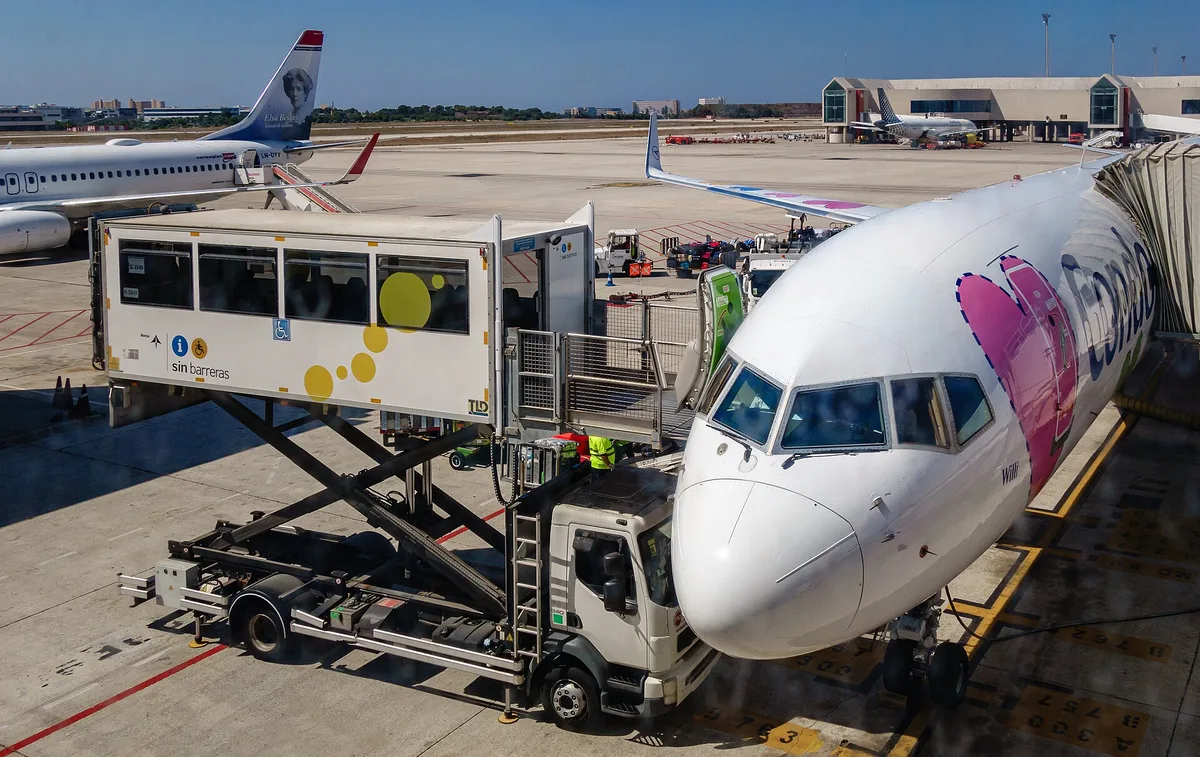
The rules also cover a wide surface area. They touch reservations and advance notice, boarding assistance, wheelchair and scooter handling, onboard seating, service animals, and complaint handling. Each of those areas can generate its own rule change, its own enforcement action, and its own headline.
What does enforcement actually look like?
Enforcement in this space is mostly complaint-driven, and it works in layers. The first layer is the airline itself: carriers are required to have complaint-resolution processes, and many disputes end there. The second layer is the regulator. In the US, that means filing with the Department of Transportation, which reviews complaints and can pursue action against a carrier. The third layer is public: enforcement actions, when they happen, are announced, and those announcements are what you read in the news.
Here is the part other coverage often skips: an enforcement headline is a lagging indicator. By the time a fine or settlement is announced, the underlying incidents happened months or years earlier, and the remedy usually looks backward — a penalty, a commitment to change a process, sometimes a payment to affected passengers. What it does not tell you is whether the fix works at your gate next Tuesday. That is why our coverage of disability housing enforcement actions makes the same point: the announcement is the start of the accountability question, not the end of it.
What can you do with that? Document everything at the time it happens. Note the date, the flight, the staff involved, and what was promised versus delivered. Photograph damage to mobility equipment before you leave the airport. A complaint built on contemporaneous records moves through the process far more reliably than one reconstructed from memory.
Why does wheelchair handling dominate the coverage?
Mobility aids sit at the sharp end of the problem. A wheelchair or scooter is not luggage; it is often a custom-fitted, expensive, essential piece of equipment. When airlines mishandle one, the traveler may lose their independence for weeks while a repair or replacement is arranged. That gap between the stakes and the handling reality is what makes these stories land.
The structural issue is that mobility aids travel in the cargo hold, outside the owner's sight, and are handled by ground crews who may be contractors rather than airline staff. Rules require airlines to accept and stow them and to return them in the condition received, but the physical handling happens in a chain of hands the passenger never sees. Every reported incident of a damaged chair highlights how much of the process depends on training and accountability at points the traveler cannot observe.
Our analysis: this is the area where rule changes are most likely to keep coming, because it is the area where the gap between the written rule and the lived experience is widest. Watch for changes in how carriers report damage, how they handle loaner equipment, and how quickly they respond to a damaged-aid claim. Those process details determine whether a rule change means anything in practice.
How do rule changes reach your trip?
A rule change does not take effect the moment it makes news. There is usually a proposal, a comment period, a final rule, and then a compliance date — sometimes spread across months or years. That timeline is worth knowing, because coverage of a proposed rule often reads like coverage of a done deal. Until the final rule lands and the compliance date passes, the old rules still govern your flight.
The same lag applies to enforcement commitments. When an airline agrees to change a process as part of a settlement, the change rolls out over time. If you fly during the rollout, you may get the old experience and the new policy in the same terminal. Knowing the compliance date, not just the announcement date, tells you what to actually expect.
This is the same pattern we track in other accessibility beats — see our coverage of building code changes taking effect in 2026 and the ADA Title II web rule compliance dates. Accessibility rules across the board share this rhythm: announce, wait, comply. Planning around the third step, not the first, is what keeps a trip or a renovation on schedule. For related coverage, see ADA Title II Web Accessibility Rule: What the 2026 Compliance Dates Mean.
What this means for travelers and planners
The takeaway is practical. First, know which rules cover your specific trip — the regulator, the route type, and the compliance status of any recent change. Second, use the official complaint process, and escalate to the regulator when the airline's own process stalls. Third, treat enforcement news as information about where the pressure points are, not as a promise about your next flight.
For readers who follow accessibility policy more broadly, air travel is a useful case study. It shows how passenger-facing rules get written, tested, and enforced — and it shows how long the distance can be between a right on paper and a smooth trip in practice. The same distance shows up in housing and benefits, which is why our accessibility news coverage keeps returning to enforcement and implementation, not just announcements.
One last framing note. The Vocabulary.com dictionary notes that "why" names the cause or intention underlying a situation — the whys and wherefores. In airline accessibility, the why is rarely mysterious: the rules exist because passengers with disabilities were long left to negotiate for basic service, and the headlines continue because closing that gap is a slow, public, unfinished job. The useful question is not why the rules make news, but which part of the system will be held to account next.