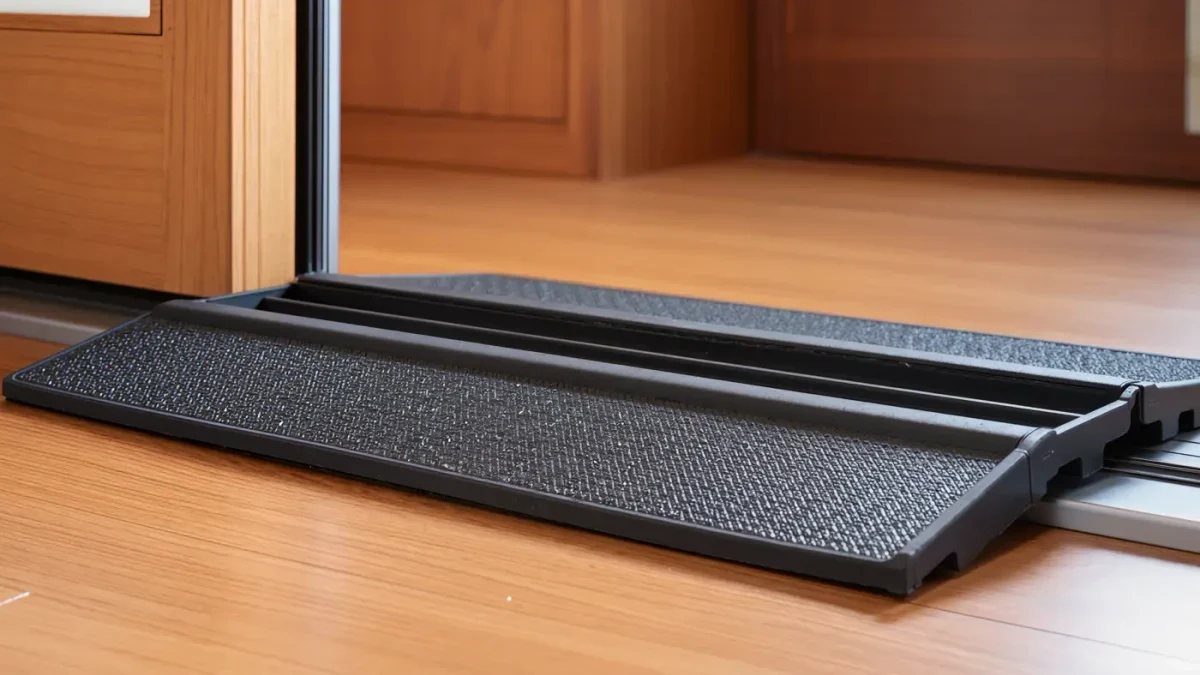
A threshold ramp solves rises up to about 6 inches, and the slope to hold to is 1:12 — one inch of rise per foot of run — the ratio the ADA 2010 Standards use for accessible routes in public buildings. As of 2025, a rubber wedge for a 1–2 inch lip typically costs $50–$150, and adjustable aluminum runs $100–$300.
Spedtacular Daily Living publishes information, not construction advice — for a rise above 6 inches or any structural change to an entry, get a contractor and your local building department involved.
When do you need a threshold ramp?
The typical culprits are the half-inch to 2-inch lips at sliding patio doors, storm door thresholds, garage entry steps, and doorway transitions between flooring types. For a wheelchair or power scooter, even a 1-inch lip is a genuine barrier — wheels stop, casters catch, and forward tips happen. For walkers and canes, thresholds are trip points; the CDC counts falls as the leading cause of injury among adults 65 and older, and transitions between rooms and at doorways are standard household hazards.
The rule of thumb: anything over about half an inch of abrupt rise deserves a ramp or transition strip. Under that, a beveled transition may be enough.
What slope should a threshold ramp have?
Hold to 1:12 where you have the run for it — 2 inches of rise needs 24 inches of ramp. The ADA 2010 Standards, section 405, set 1:12 as the maximum slope for ramps in covered public buildings, with cross slopes no steeper than 1:48. ANSI A117.1, referenced by many local building codes, carries the same ratio for the buildings it covers. A private house is not legally required to meet these numbers, but they were researched against real wheelchair propulsion, and steeper shortcuts are noticeably harder and less safe to climb — especially in a manual chair or on a wet day.
Where space is short, threshold ramps sometimes go steeper for very low rises: a 1:8 ratio over 1–2 inches of rise is a common compromise in practice for short rubber wedges, though it exceeds what public-building standards allow for a route. Anything steeper than 1:8 at home is a sign you need a different solution — a longer ramp, a re-graded landing, or a vertical platform lift for big rises.
What types are available, and what do they cost?
| Type | Best for | Typical cost (2025) |
|---|---|---|
| Solid rubber wedge | 1–2 inch lips at sliding doors and garage entries; heavy foot traffic | $50–$150 |
| Adjustable aluminum threshold ramp | 1–6 inch rises; door swings that pass over the ramp | $100–$300 |
| Rubber bridge-style with side curbs | Sliding-door tracks where wheels cross a channel | $80–$250 |
| Foam transition strips | Lips under half an inch between rooms | $15–$40 |
| Modular aluminum doorway ramp | Entry steps with 6–30 inches of rise | $1,000–$5,000+ installed |
Prices vary by width and rise; treat these as typical retail ranges as of 2025, not quotes.
How do you choose and fit one?
- Measure the rise. From the floor to the top of the threshold, at the highest point you will cross. Write it down — rise drives everything else.
- Measure the available run. Distance from the threshold to the nearest obstruction in the direction of travel. Compare against 1:12; a 2-inch rise with 24 inches of clear space qualifies.
- Measure the width of the doorway and the swing of the door. The ramp must not block the door from closing. For the door itself, note that accessible doors need 32 inches of clear width per the ADA 2010 Standards, section 404 — a home number worth matching when a doorway is part of the project.
- Pick the material. Rubber wedges stay put and handle weather; aluminum adjusts and carries more weight — most support 600–800 pounds, per manufacturer specifications, which matters for a powered chair plus user.
- Check the landing side. The ramp needs a reasonably level surface at both ends. A wedge that ends on a sloped driveway can create a new edge to catch.
- Install and test. Most threshold ramps set in place or bolt down in minutes. Cross it slowly with assistance the first time before making it part of your daily route.
Are threshold ramps allowed in rentals?
Generally yes, and they are among the easiest modifications to justify. Portable rubber and aluminum ramps involve no construction at all, so no permission question arises beyond courtesy. If anchoring is needed, the Fair Housing Act generally requires landlords to allow reasonable modifications by tenants with disabilities, at the tenant's expense in most situations — put the agreement in writing first.
What about bigger rises at a doorway?
Above 6 inches, a threshold ramp stops being the right tool. A modular aluminum or wooden ramp built to 1:12 — 8 inches of rise takes 8 feet of run — typically costs $1,000–$5,000 or more installed, as of 2025 industry ranges. Where the run does not fit, a vertical platform lift, commonly $5,000–$15,000 installed, replaces the slope with a mechanical rise. Some Medicaid waivers and VA programs fund entry ramps for people who meet each program's eligibility rules; the program's own published terms govern, so read them directly.
What keeps a threshold ramp safe over time?
Installation gets the attention, but maintenance keeps a small ramp from becoming a new hazard. Sweep the ramp's edges weekly — gravel, leaves, and ice at the bevel are what catch casters and cane tips, not the ramp itself. Re-check that the wedge has not shifted after deep cleaning or floor work; a ramp sitting a half-inch off its mark recreates the lip you bought it to remove. Outdoors, keep the landing side draining away from the door, because water pooling at the bottom of a ramp freezes into a shelf. And replace, don't repair, a rubber wedge once its edges round over or cracks appear — replacement costs less than one fall.
Frequently asked questions
How steep can a threshold ramp be?
Aim for 1:12 — one inch of rise per foot of run — the maximum the ADA 2010 Standards allow on public accessible routes and the ratio ANSI A117.1 mirrors. For very low rises, short wedges sometimes run steeper in homes, but avoid anything beyond about 1:8.
Do rubber threshold ramps work for wheelchairs?
Yes, for rises up to about 2 inches — solid rubber wedges rated for wheeled traffic are a standard solution at sliding doors and garage entries. Check the load rating on the product's specification; most support well beyond a wheelchair's weight.
Can you leave a threshold ramp outside year-round?
Solid rubber and aluminum versions handle weather, but check ice and leaf buildup in winter — a ramp with a clogged edge becomes a new hazard. Non-slip surface and drainage matter more than the material itself.