The biggest code change of 2026 for accessibility took effect January 1, 2026: California's 2025 Building Code (Title 24, Part 2), built on the 2024 International Building Code, with revised accessibility provisions in Chapter 11B for public buildings and commercial facilities, per the California Building Standards Commission's published summary of 2025 code changes. Several other states phase in 2024 I-Code editions later in 2026.
Spedtacular Daily Living publishes information, not legal advice. Code requirements vary by state, city, and building type — the federal ADA standards still apply on top of any local code.
What changed in California on January 1, 2026?
California regulates accessibility through its own Chapters 11A (housing) and 11B (public buildings, public accommodations, and commercial buildings) rather than the standard IBC Chapter 11 route. Per the Building Standards Commission's summary, the 2025 edition added new introductory language about buildings without elevators — cases where site-impracticality tests reduce the number of accessible units required — and revised path-of-travel requirements in alterations, which govern how much of an existing building's accessible route must be upgraded when other work is done.
For projects permitted in California from January 1, 2026 forward, the operative reference documents are the 2025 CBC and its Chapter 11B provisions, not the 2022 edition.
Which other states change codes in 2026?
A few verified examples from state adoption schedules:
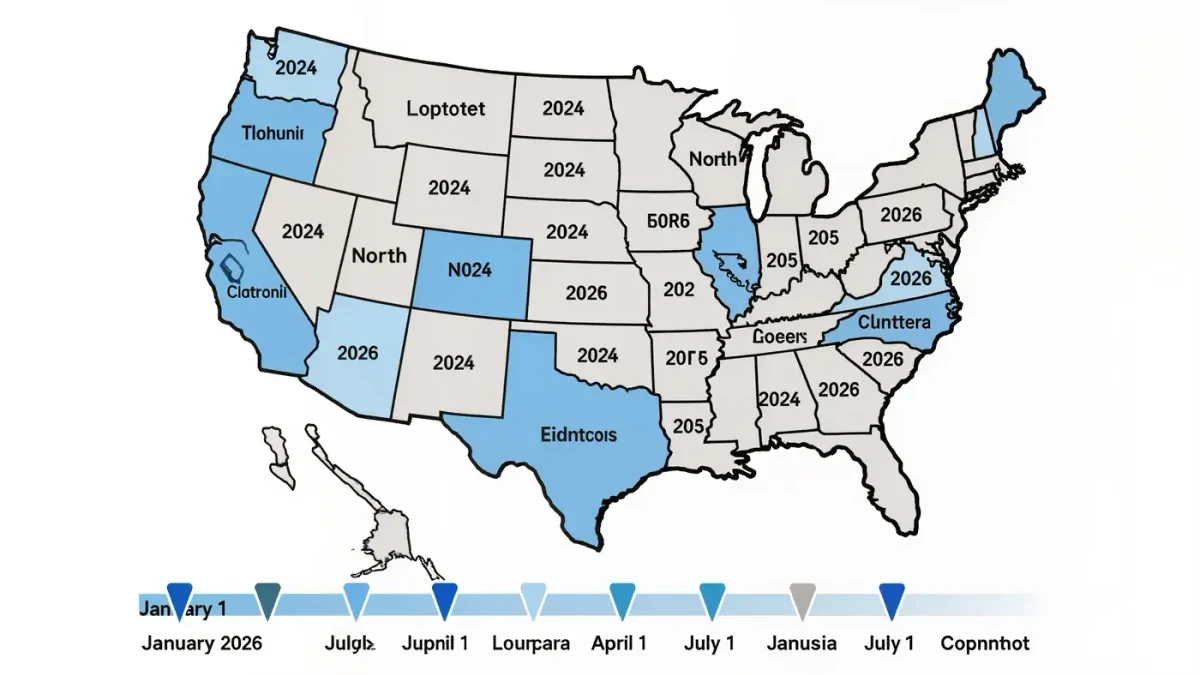
- North Carolina: its 2024 code editions do not become effective until after April 1, 2026, per the state's adoption schedule.
- Louisiana: Act 534, effective July 1, 2026, shifts accessibility enforcement toward the IBC Chapter 11 provisions, with changes to how municipalities enforce.
- Connecticut: the next state building and fire code editions were expected July 1, 2026, on a delayed timeline.
The general pattern: states that adopt the 2024 IBC also reference the 2023 edition of ICC A117.1, the technical standard for accessible buildings and facilities. States on older IBC editions — a majority — still reference A117.1-2017, per ICC adoption tracking.
What does this mean if you're planning a modification or a move?
Three practical takeaways:
- Permit date controls. In most jurisdictions, the code in force when your permit application is filed is the code that applies. A project filed in December 2025 in California was reviewed under the 2022 CBC; one filed in January 2026 falls under the 2025 edition.
- Code is a floor, not the whole obligation. The 2010 ADA Standards apply regardless of which local code a building meets, and the Fair Housing Act design requirements govern multifamily housing separately. A building can be code-compliant and still fail federal accessibility law.
- Ask which edition your reviewer uses. When hiring a contractor or architect for accessible work this year, ask which code edition and which A117.1 edition the design references. It's a one-question test of whether they track changes at all.
Why do code years lag the calendar?
The ICC publishes new model codes on a three-year cycle, and states then amend, hold hearings, and set effective dates — typically one to three years after publication. That lag is why a code labeled 2025 took effect in 2026, and why accessibility requirements differ state to state even though all 50 states use the IBC as a base, per the American National Standards Institute's overview of IBC adoption.