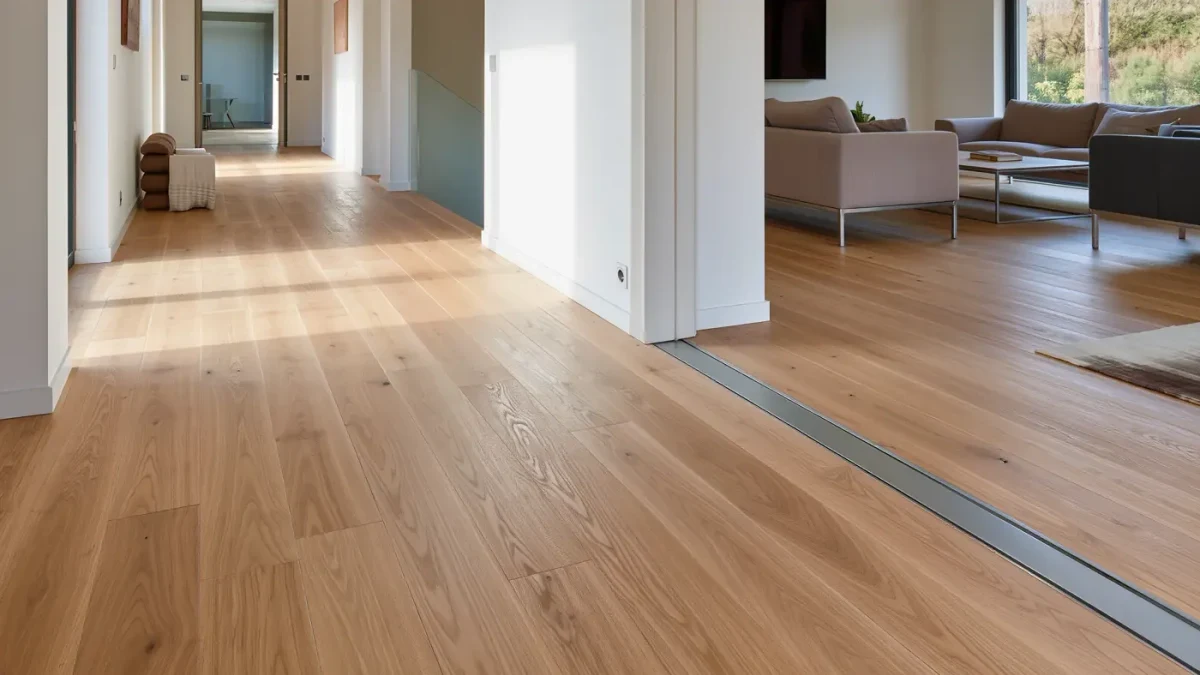
The best wheelchair-friendly flooring is firm, stable, and slip resistant, per ADA 2010 Standards section 302.1, with carpet pile at a half inch or less under section 302.2. In real homes that usually means luxury vinyl plank, tile, hardwood, or very low-pile carpet. The ADA covers public buildings, not homes, so treat these as design targets.
Why Flooring Decides How a Home Feels
Wheelchairs and scooters push, turn, and roll thousands of times a day across the floor, and the surface determines whether that takes effort or not. Deep pile carpet can make an independent transfer-to-kitchen trip exhausting; soft, cushioned vinyl can develop ruts under castor wheels; thick transitions between rooms can stop a chair cold. The floor also carries the fall-risk question for people who walk some of the time, which makes slip resistance matter alongside rollability.
Two numbers anchor every choice: firmness and stability, defined in the ADA 2010 Standards section 302.1 for accessible surfaces, and pile height under section 302.2, which caps carpet exposed on an accessible route at a half inch. Those standards were written for public buildings; at home they are the best available yardstick.
Which Flooring Options Work Best?
Here is how the main options compare. Costs are typical installed ranges per square foot, as of mid-2026, and vary by region and subfloor condition.
| Flooring | Rollability | Installed cost/sq ft (typical) | Watch-outs |
|---|---|---|---|
| Luxury vinyl plank (LVP) | Excellent | $3-$8 | Choose rigid-core; cheap flex planks can dent under castors |
| Porcelain or ceramic tile | Excellent | $8-$15 | Hard on falls; use slip-resistant (DCOF-rated) finishes |
| Engineered or solid hardwood | Very good | $8-$14 | Soft species dent; wheel wear shows in finish over years |
| Laminate | Good | $4-$8 | Slippery when wet; damaged seams swell |
| Low-pile carpet (under 1/2 in) | Fair | $3-$7 | More push effort; pick low, dense pile per ADA 302.2 |
| High-pile or thick pad carpet | Poor | varies | Avoid on any wheelchair route |
What Makes Each Option Work or Fail?
Luxury vinyl plank
LVP has become the default recommendation in accessible-home projects because it is rigid, water-resistant, and forgiving to walk on, and because planks can usually be replaced individually if one is damaged mid-route. Manufacturer documentation for major rigid-core lines notes ratings for residential and commercial traffic; the commercial-rated products generally hold up better under daily castor traffic. Install it flat with tight seams and minimal transitions.
Tile
Porcelain rolls beautifully and shrugs off castor wear. The trade-off is impact: tile is unforgiving in a fall. If you choose it, look for slip-resistance testing — the tile industry uses dynamic coefficient of friction (DCOF) values, with 0.42 or higher the common wet-area benchmark in industry standard A137.1 — and wider grout lines that are still flush-set so wheels do not chatter.
Hardwood
Hardwood rolls well and can be refinished, a real advantage over decades. Harder species such as hickory or oak resist the denting castors cause; soft pine does not. Site-finished floors give you gap-free coverage; some prefinished floors have micro-bevels between boards that are fine for wheels but catch some cane tips.
Carpet, used selectively
Carpet reduces fall injury and quiets a home, but it is the hardest surface to push across. If you keep it, follow the ADA 302.2 benchmark of a half inch of pile or less, choose a dense low level-loop, and pair it with the thinnest firm pad the manufacturer allows. Many wheelchair users keep carpet only in bedrooms and living rooms, off the main travel routes.
How Do Transitions and Thresholds Fit In?
The best floor fails at a bad transition. Height changes between rooms should be beveled and kept to a half inch or less, with changes above a quarter inch beveled at 1:2 — the thresholds rule in ADA 2010 section 404.2.5, again a benchmark rather than a home mandate. Flush or near-flush transitions between same-height floors, and sloped adaptors where heights differ, keep the route continuous. Check every doorway on the main route with a tape measure before ordering materials, and write the finished-floor heights for each room on the same sheet, so your installer can order transition profiles with the flooring rather than after it.
How Do You Plan the Project?
Work the sequence, not the showroom:
- Map the daily routes: bedroom to bathroom to kitchen to entry. Those corridors get the hardest-wearing, easiest-rolling surface.
- Match subfloor condition early; older homes with uneven subfloors add leveling costs that can exceed the flooring itself.
- Order samples and roll a loaded wheelchair or a caster across them at home if possible.
- Price the whole route, including transitions, per room, from three installers.
- Ask about off-gassing and installation timing if chemical sensitivity is a factor; manufacturer documentation lists VOC certifications for most lines.
Can Funding Help with Flooring?
Sometimes. Some Medicaid home and community-based services waivers fund flooring changes when they address a documented functional need, and a few state and local grant programs cover accessibility modifications broadly. Eligibility is stated program by program, and the terms change; check the program's own page before planning around any dollar figure. This is program information, not a benefits determination.
What Should You Do Before You Buy?
Three checks prevent most regrets:
- Roll test samples with the actual chair, on the actual subfloor, loaded the way it is loaded daily.
- Verify the wear rating and slip-resistance data in the manufacturer's documents, not the sales floor placard.
- Plan every transition on the route to be beveled, under a half inch, or flush.
Standards cited here are national benchmarks for public buildings; codes and program rules vary by jurisdiction, so confirm local requirements with your building department.
How Long Does Each Floor Last Under Wheels?
Durability data comes from manufacturers, not from showroom promises, and the differences matter on a wheelchair route. Manufacturer documentation for major rigid-core LVP lines lists wear-layer thickness from 12 to 30 mils; industry guidance generally points to 20 mils or more for heavy residential traffic, and thicker wear layers resist castor marking better. Porcelain tile carries a PEI hardness rating, and a PEI 4 or 5 tile stands up to daily chair traffic without surface wear. Hardwood longevity depends on finish cycles: a site-finished oak floor can be sanded and refinished several times over its life, a real advantage when a decade of castors dulls one stretch of hallway. Low-pile carpet on a route typically shows wear paths and matting within a few years of daily chair use, which is one more reason to confine it to rooms off the main route. Whatever the surface, keep the manufacturer's maintenance instructions — wrong cleaners, especially on LVP and hardwood finishes, void warranties and degrade slip resistance faster than the wheels do.