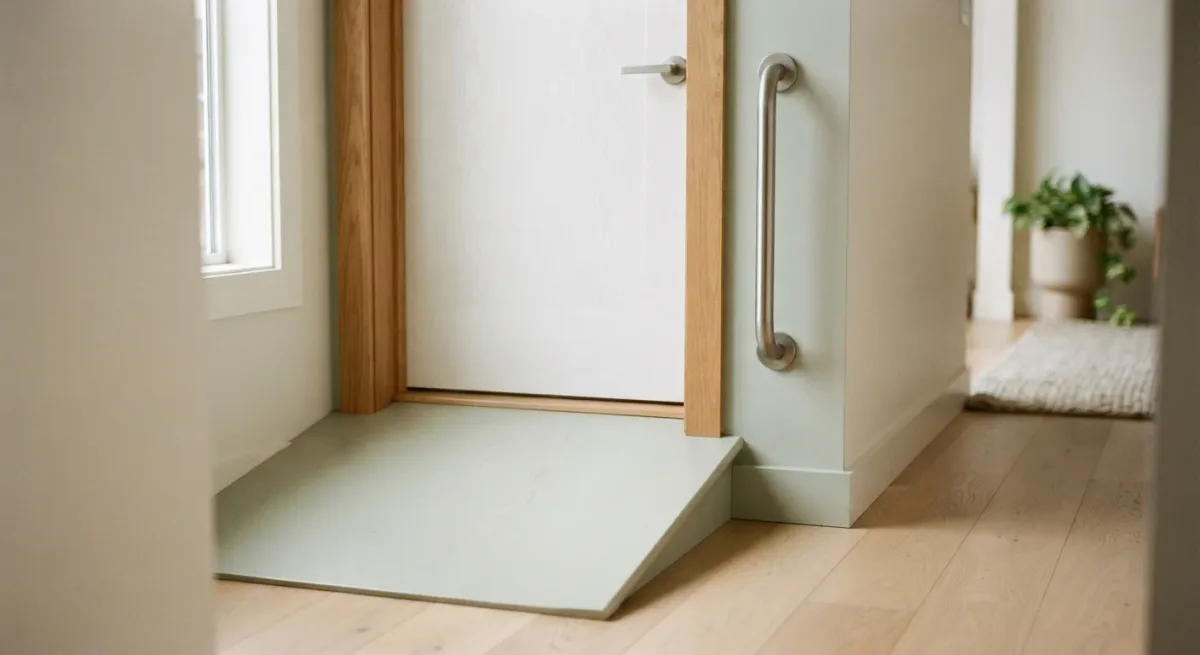
The VA runs three grants that pay for accessible home modifications — SAH, SHA, and HISA — with different dollar caps and different eligibility tests. The largest, Specially Adapted Housing (SAH), carries a lifetime cap of $117,014 (2024 rate) for severely injured veterans to buy, build, or remodel a home; Special Home Adaptations (SHA) tops out at $22,036 (2024); and the Home Improvement and Structural Alterations (HISA) grant covers up to $6,800 for service-connected needs or $2,000 otherwise. Eligibility is decided by the VA per its published rules — this explainer describes the programs as the VA states them, not anyone's individual eligibility.
Spedtacular Daily Living publishes information about programs, not benefits advice — applications are decided by the VA alone.
Who is each grant for?
Each program answers a different situation, per the VA's program pages:
| Grant | 2024 cap | Designed for | Covers (per VA terms) |
|---|---|---|---|
| SAH | $117,014 lifetime | Veterans with certain severe service-connected disabilities | Building, buying, or remodeling an adapted home; temporary residence help |
| SHA | $22,036 lifetime | Veterans with certain service-connected disabilities | Adaptations such as ramps, wider doors, roll-in showers |
| HISA | $6,800 / $2,000 | Any VA-documented disability; higher tier for service-connected | Specific alterations: wheelchair-safe entrances, grab bars, walk-in showers |
The disability criteria for SAH and SHA are specific — loss of use of extremities, certain burns, blindness, per the VA's listed conditions — and they are not interchangeable with a general disability rating. HISA is the broadest doorway: it does not require a service-connected condition for the $2,000 tier.
What can the money actually pay for?
SAH and SHA fund the structure: ramps, widened doorways, roll-in showers, lowered kitchen counters, adaptive doors and windows — the VA's SAH page also permits the benefit toward a temporarily adapted family member's home while a veteran's own home is being readied. HISA's regulation, 38 CFR 17.228, lists eligible alterations explicitly: wheelchair-accessible entrances and exits, grab bars in bathrooms, roll-in showers with handheld showers, access to plumbing for wheelchair use among them. What HISA does not cover: general remodeling unrelated to the listed alterations, and work on a home the veteran does not occupy.
How do the grants stack?
This is the detail most summaries miss. Per the VA's published guidance, a veteran may use HISA together with SHA or SAH for the same project when the HISA work relates to a service-connected condition — the programs are designed to layer, not compete. SAH and SHA also combine, up to a shared lifetime maximum that the VA adjusts annually with construction cost indices. Practical sequencing, per program documents: apply for HISA through the VA prosthetics department with VA Form 10-0103, while SAH and SHA applications run through VA Form 26-4555 to the SAH agent for your region.
What is the application path?
The documented sequence for SAH/SHA:
- Confirm eligibility with your VA medical team and obtain the required disability documentation the VA lists for the specific grant.
- File VA Form 26-4555 (Application in Acquiring Specially Adapted Housing or Special Home Adaptation Grant).
- An SAH agent assigned to your case helps scope the project; the VA must approve plans before construction for grant-eligible work.
- Use the VA's posted list of builders and designers familiar with SAH standards — or your own, with agent review.
Payment goes to the veteran or the contractor per the VA's disbursement rules, after the required inspections for completed phases.
What the sources leave open
Timelines are the open question — the VA does not publish current processing-time data in the program pages, and veteran experiences reported in coverage vary. The caps also adjust annually: the 2024 figures here will change, so treat the VA's site as the live number before filing anything.